Table of Contents
ToggleNeuroma Pain Relief at Home (✨SOOTHING FOOT CARE!) Discover simple home strategies that may support comfort, mobility, and daily foot wellness naturally.


Foot pain can make simple daily activities feel challenging. Walking, exercising, standing at work, or even relaxing at home may become uncomfortable when nerve irritation affects the feet.
One common condition linked with forefoot discomfort is a neuroma, which can cause burning sensations, tingling, numbness, or sharp pain between the toes.
Many people search for neuroma pain relief at home because they want practical solutions that may help reduce discomfort and improve everyday movement.
While professional evaluation is important for ongoing or severe symptoms, several home-based approaches can support foot comfort by reducing pressure, improving support, and encouraging healthier foot habits.
A neuroma is often associated with irritation of a nerve in the foot. Understanding what triggers symptoms and making simple adjustments can help many individuals better manage their daily routine.
This guide explains what a neuroma is, common causes and symptoms, and different home strategies that may help support comfort and mobility.
What Is a Neuroma?
A neuroma is a condition where a nerve becomes irritated, compressed, or thickened due to repeated stress or pressure.
The most common type affecting the foot is Morton’s neuroma, which usually develops between the third and fourth toes.
Although the name may sound concerning, a neuroma is generally not a cancerous growth. Instead, it involves changes around a nerve caused by ongoing irritation.
The nerves in the foot are responsible for sending sensory signals, allowing you to feel touch, pressure, and temperature.
When these nerves experience repeated compression, surrounding tissues may become inflamed or irritated, leading to uncomfortable sensations.
People with neuroma symptoms often describe the feeling as:
- A burning sensation under the toes
- Tingling or pins-and-needles feelings
- Sharp pain while walking
- Numbness in the toes
- Feeling like a small object is inside the shoe
- Discomfort that improves after removing footwear
Reducing repeated pressure on the affected nerve is a major part of supporting neuroma comfort.
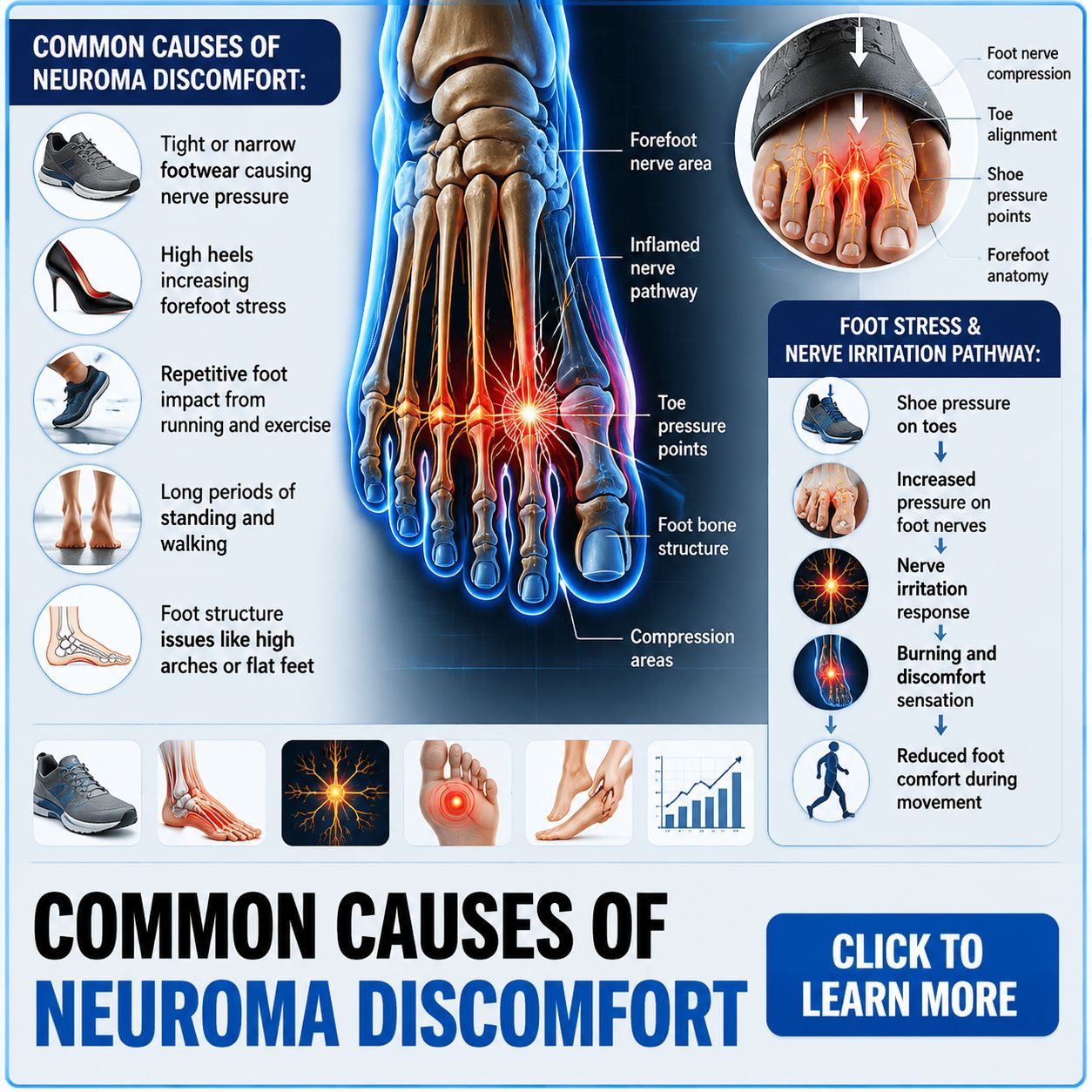
Common Causes of Neuroma Discomfort
Several factors can contribute to irritation, compression, or increased pressure on the nerves in the foot.
In many cases, neuroma discomfort develops slowly over time as repeated stress affects the tissues surrounding the affected nerve.
Understanding these common triggers can help people make better choices to support foot comfort and reduce unnecessary strain.
Wearing Tight or Improper Footwear
Footwear plays an important role in maintaining healthy foot mechanics. Shoes with a narrow toe box can squeeze the toes together, increasing pressure on the nerves located between the bones of the foot.
High heels may also contribute to neuroma discomfort because they shift more body weight toward the front of the foot.
Choosing shoes with adequate space, cushioning, and support may help reduce repeated irritation caused by poor footwear choices.
Repetitive Foot Stress
Activities that place repeated pressure or impact on the feet may increase the likelihood of nerve irritation.
High-impact movements can create ongoing stress in the forefoot area, especially when proper support is lacking.
Common activities associated with increased foot pressure include:
- Running
- Jumping exercises
- Long-distance walking
- Sports activities
- Extended periods of physical activity
Using supportive footwear, allowing adequate recovery time, and gradually increasing activity levels may help reduce unnecessary strain on the feet.
Foot Shape and Structure
Individual foot structure can influence how pressure is distributed while standing, walking, or exercising. Certain characteristics may place additional stress on the nerves and surrounding tissues.
Factors that may contribute include:
- High arches
- Flat feet
- Toe alignment issues
- Limited flexibility
Understanding your foot structure can help identify supportive footwear or care strategies that improve comfort.
Extended Standing and Daily Pressure
Spending many hours on your feet can increase pressure on the forefoot and contribute to discomfort.
Taking regular breaks, wearing supportive shoes, and practicing gentle foot stretches may help reduce daily stress and support better foot comfort.
Neuroma Pain Relief at Home: Helpful Strategies
When searching for neuroma pain relief at home, many individuals focus on approaches that improve comfort while reducing unnecessary stress on the feet.
Below are several supportive strategies commonly used to encourage better foot wellness.
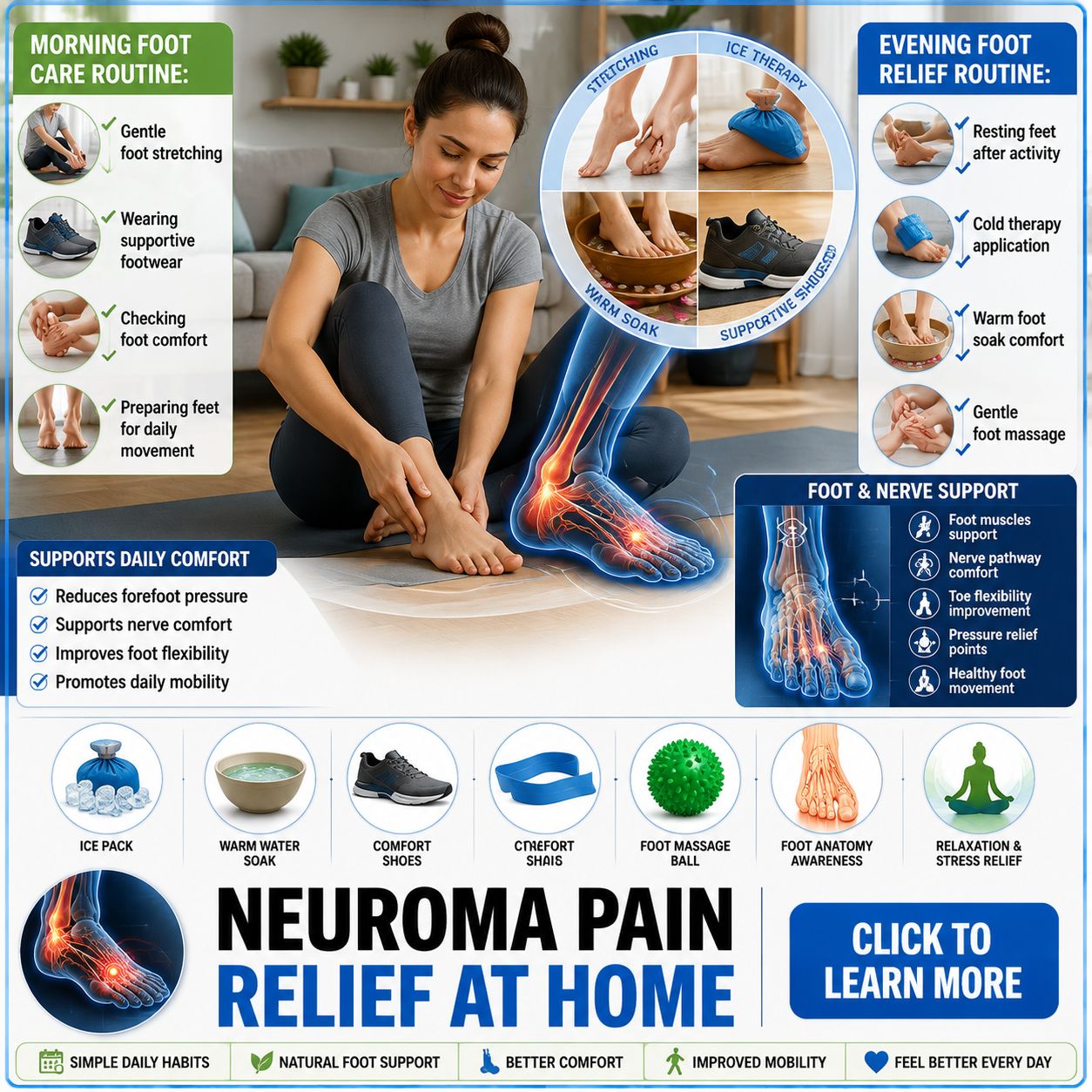
1. Wear Comfortable and Supportive Shoes
Changing footwear is often one of the first steps people consider when managing neuroma discomfort.
Supportive shoes should provide:
- A wide toe box
- Enough space for natural toe movement
- Good cushioning
- Proper arch support
- Stable construction
Shoes that squeeze the front of the foot may increase nerve pressure and make symptoms worse.
Choosing comfortable footwear for daily activities may help reduce repeated irritation and improve walking comfort.
2. Use Foot Pads for Additional Cushioning
Metatarsal pads are designed to provide extra support beneath the front part of the foot.
These small cushions may help redistribute pressure away from sensitive areas and make walking more comfortable.
Proper placement is important. A pad positioned incorrectly may not provide the desired support, so finding the right location may require adjustment.
Many people use foot pads inside their shoes during activities that normally increase discomfort.
3. Apply Cold Therapy
Cold therapy is a commonly used home technique for temporary relief from irritation and soreness.
Applying a cold pack wrapped in a towel to the painful area may help calm discomfort after activity.
Helpful tips include:
- Avoid placing ice directly on the skin
- Use short application periods
- Allow the foot to rest afterward
Cold therapy may be especially useful after long periods of walking or standing.
4. Practice Gentle Foot Massage
A gentle foot massage may help relax surrounding tissues and promote comfort.
Some techniques people commonly try include:
- Light massage around the ball of the foot
- Gentle toe movement
- Rolling the foot over a soft massage ball
Massage should always feel comfortable. Applying strong pressure directly to a painful nerve area may increase irritation.
5. Stretch Your Feet Regularly
Gentle foot stretching is one of the easiest ways to support neuroma pain relief at home. Regular stretching helps improve flexibility, reduces muscle tightness, and may relieve pressure on the irritated nerve.
Here are a few simple stretches you can try:
- Toe Stretch: Sit comfortably and gently pull your toes backward until you feel a mild stretch along the bottom of your foot. Hold for 15–30 seconds, then relax. Repeat 3–5 times on each foot.
- Calf Stretch: Stand facing a wall with one foot behind the other. Keep your heel flat on the floor and lean forward until you feel a stretch in your calf. Hold for 20–30 seconds and repeat 2–3 times on each leg.
- Plantar Fascia Stretch: Cross one leg over the other while seated. Gently pull your toes toward your shin to stretch the bottom of your foot. Hold for 20 seconds and repeat several times.
- Toe Spread Exercise: Spread your toes apart as far as you comfortably can and hold for 5–10 seconds before relaxing. Repeat 10–15 times to help strengthen the small muscles in your feet and improve flexibility.
- Foot Rolling: Place a tennis ball or frozen water bottle under your foot and slowly roll it from your heel to your toes for 2–3 minutes. This gentle massage may help reduce tension in the surrounding tissues.
6. Reduce Activities That Increase Discomfort
Understanding personal triggers can help manage symptoms.
If certain activities consistently increase pain, consider modifying them.
Helpful adjustments may include:
- Taking regular breaks
- Switching to lower-impact exercises
- Wearing supportive footwear during activities
- Avoiding prolonged pressure on painful areas
Making small changes may help prevent repeated irritation.
7. Rest and Elevate Your Feet
Rest allows your feet to recover after daily stress.
Simple habits may include:
- Elevating your feet after long days
- Avoiding unnecessary standing
- Wearing comfortable footwear indoors
- Resting after high-impact activities
Even short periods of rest may help improve daily comfort.
8. Maintain a Healthy Lifestyle
Overall wellness can influence how your body manages discomfort and recovery.
Helpful lifestyle habits include:
- Eating a balanced diet
- Staying physically active
- Drinking enough water
- Maintaining a healthy body weight
- Getting quality sleep
Healthy habits support the body’s natural maintenance processes and may contribute to better mobility.
Warm Foot Soaks for Comfort
Warm foot soaks are a simple home comfort practice that may help relax tired feet, ease muscle tension, and create a soothing routine for people experiencing everyday foot discomfort.
Soaking the feet in comfortably warm water may help improve relaxation, reduce feelings of stiffness, and support overall foot comfort after long periods of standing, walking, or physical activity.
- Prepare Warm Water: Fill a basin with comfortably warm water. Avoid using very hot water, as excessive heat may irritate the skin or cause injury, especially if foot sensation is reduced.
- Soak Your Feet: Place your feet in the water for about 10–20 minutes while allowing the warmth to relax the muscles and surrounding tissues.
- Dry and Moisturize: After soaking, gently dry your feet, especially between the toes, and apply a moisturizer to help maintain soft, healthy-looking skin.
Warm foot soaks can be a relaxing addition to a foot-care routine, offering temporary comfort and relaxation when combined with healthy habits and appropriate care.
Foods and Nutrients That Support Overall Nerve Wellness
A balanced diet provides essential nutrients that help maintain the normal structure and function of the nervous system.
While food alone cannot treat nerve conditions, choosing nutrient-rich foods may support overall nerve wellness, healthy communication between nerve cells, and the body’s natural repair processes.
A nutrient-rich eating pattern may include:
- Colorful vegetables
- Fruits
- Lean proteins
- Whole grains
- Healthy fats
Certain nutrients are important for normal nerve function, including vitamins and minerals obtained through a balanced diet.
When to Seek Professional Medical Advice?
Home care approaches may support mild discomfort, but some symptoms require professional evaluation.
Consider speaking with a healthcare provider if you experience:
- Persistent or worsening pain
- Significant numbness
- Difficulty walking
- Symptoms affecting daily activities
- Pain that does not improve with home strategies
A healthcare professional can evaluate the cause of discomfort and recommend suitable treatment options.
Professional Treatment Options for Neuroma
If home strategies do not provide enough relief, professional treatment options may help manage neuroma discomfort and improve foot function.
A healthcare provider can evaluate symptoms, identify contributing factors, and recommend an approach based on individual needs and overall foot health.
Physical Therapy
- A physical therapist may recommend targeted exercises and techniques designed to improve foot movement, flexibility, and strength. These therapies may help reduce pressure around irritated areas, improve walking patterns, and support better foot mechanics.
Custom Orthotics
- Custom shoe inserts may help improve foot alignment and distribute pressure more evenly across the foot. By providing additional support and cushioning, orthotics may reduce stress on sensitive areas and improve comfort while standing, walking, or exercising.
Medical Procedures
- For individuals with ongoing symptoms, healthcare providers may discuss additional treatment options. Depending on the severity and response to other approaches, these may include targeted injections, minimally invasive procedures, or surgical options in more persistent cases.
How to Prevent Neuroma Discomfort?
Preventing repeated pressure on foot nerves may help support long-term comfort.
Helpful prevention habits include:
- Choosing properly fitting shoes
- Avoiding excessively high heels
- Replacing worn footwear
- Stretching regularly
- Maintaining healthy activity levels
- Addressing foot discomfort early
Good foot care habits can make a meaningful difference over time.
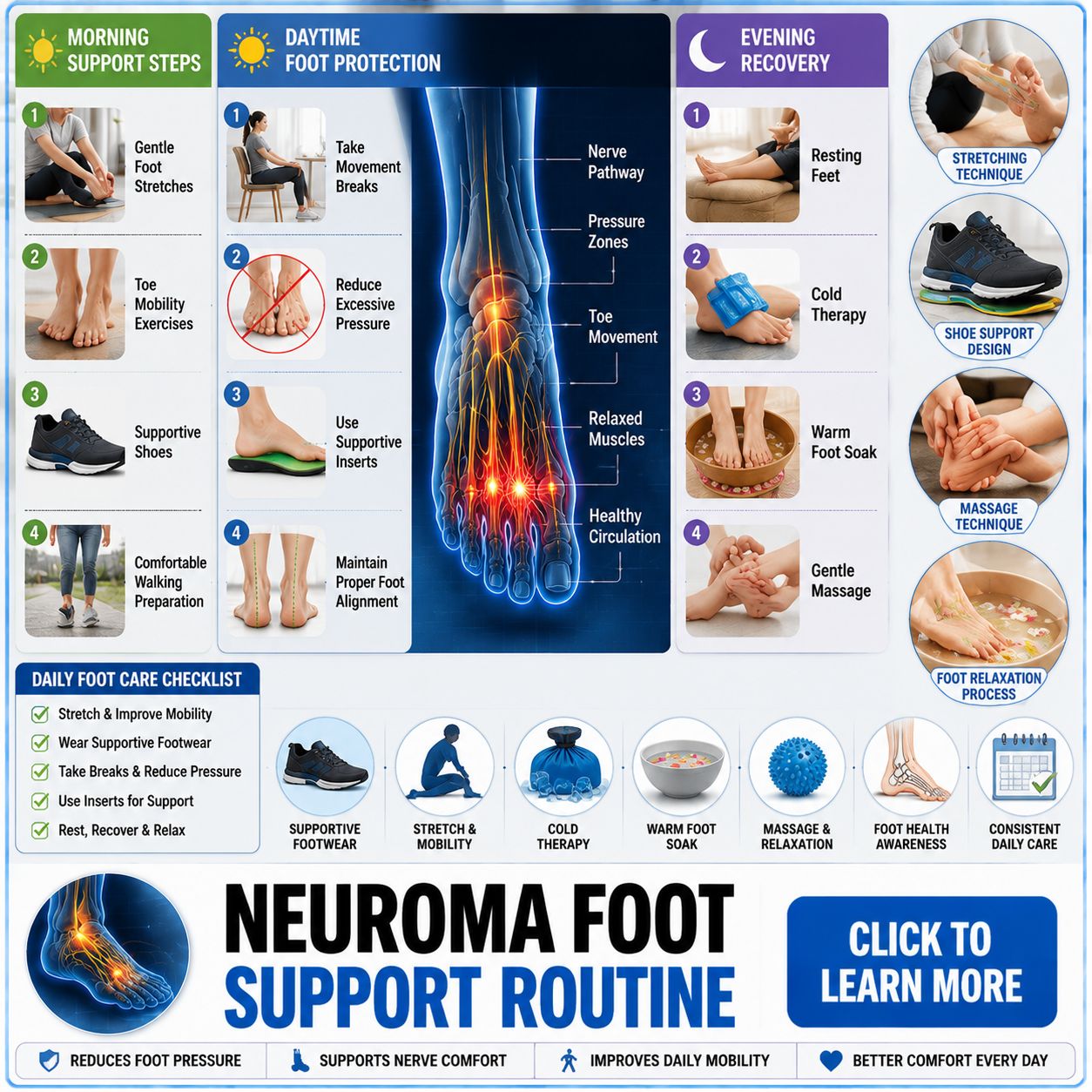
Simple Daily Routine for Neuroma Foot Support
A consistent daily routine may help support foot comfort and reduce stress on areas affected by neuroma discomfort.
Small habits focused on stretching, proper footwear, and gentle care can help maintain better foot function throughout the day.
Morning
- Perform gentle foot stretches
- Wear supportive shoes
- Check for areas of discomfort
During the Day
- Take movement breaks
- Avoid excessive pressure
- Use supportive inserts if needed
Evening
- Rest your feet
- Apply cold therapy if helpful
- Practice a gentle massage
Small daily actions may support better foot comfort.
Final Thoughts
Finding effective neuroma pain relief at home often begins with reducing pressure on the affected area, choosing supportive footwear, and maintaining consistent foot care habits.
Simple approaches such as wearing comfortable shoes, practicing gentle stretches, using massage techniques, and applying cold therapy when needed may help support daily comfort and mobility.
Lifestyle adjustments, including taking regular movement breaks and avoiding activities that increase foot strain, may also contribute to better foot support over time.
Creating a routine that focuses on prevention and comfort can help many individuals manage everyday symptoms more effectively.
By identifying personal triggers and following consistent foot care practices, individuals can take meaningful steps toward improving comfort, maintaining mobility, and supporting healthier foot function.
.
.
.
