Does Sermorelin Make You Hungry? – (🔥APPETITE EFFECTS REVEALED!). Learn why hunger changes happen and what to expect with Sermorelin.

Introduction
Many people exploring Sermorelin wonder about one common question: does Sermorelin make you hungry? Appetite changes can be confusing, especially when starting any wellness routine that may influence hormones, metabolism, sleep patterns, or body composition.
Understanding why hunger changes may happen can help people set realistic expectations and recognize what is normal.
This article explains the connection between Sermorelin and appetite, why some people feel hungrier, how growth hormone relates to metabolism, and what factors can influence hunger levels.
What Is Sermorelin?
Sermorelin is a peptide-based therapy that works by mimicking the action of growth hormone-releasing hormone (GHRH), a naturally occurring signal produced by the body.
The main role of Sermorelin is to encourage the pituitary gland to produce and release more of the body’s own growth hormone.
Growth hormone plays an important role throughout life and is involved in processes such as tissue repair, muscle support, metabolism, and overall physical function.
This change is a normal part of aging, but some individuals seek medical guidance regarding therapies that support healthy hormone levels and wellness goals.
Sermorelin is commonly discussed in connection with goals such as:
- Supporting healthy energy levels
- Promoting muscle maintenance
- Improving recovery after physical activity
- Supporting healthy sleep patterns
- Encouraging healthy body composition
The Short Answer: Can Sermorelin Increase Hunger?
Yes, some people may notice an increase in hunger while using Sermorelin, but it does not happen to everyone.
Appetite changes may occur because growth hormone activity is connected to metabolism and how the body uses energy.
Some people describe feeling:
- A stronger appetite during the day
- More interest in protein-rich foods
- Increased hunger after exercise
- Changes in meal timing preferences
Hunger changes are usually related to how the body responds to changes in metabolism, energy needs, recovery, and hormone balance.
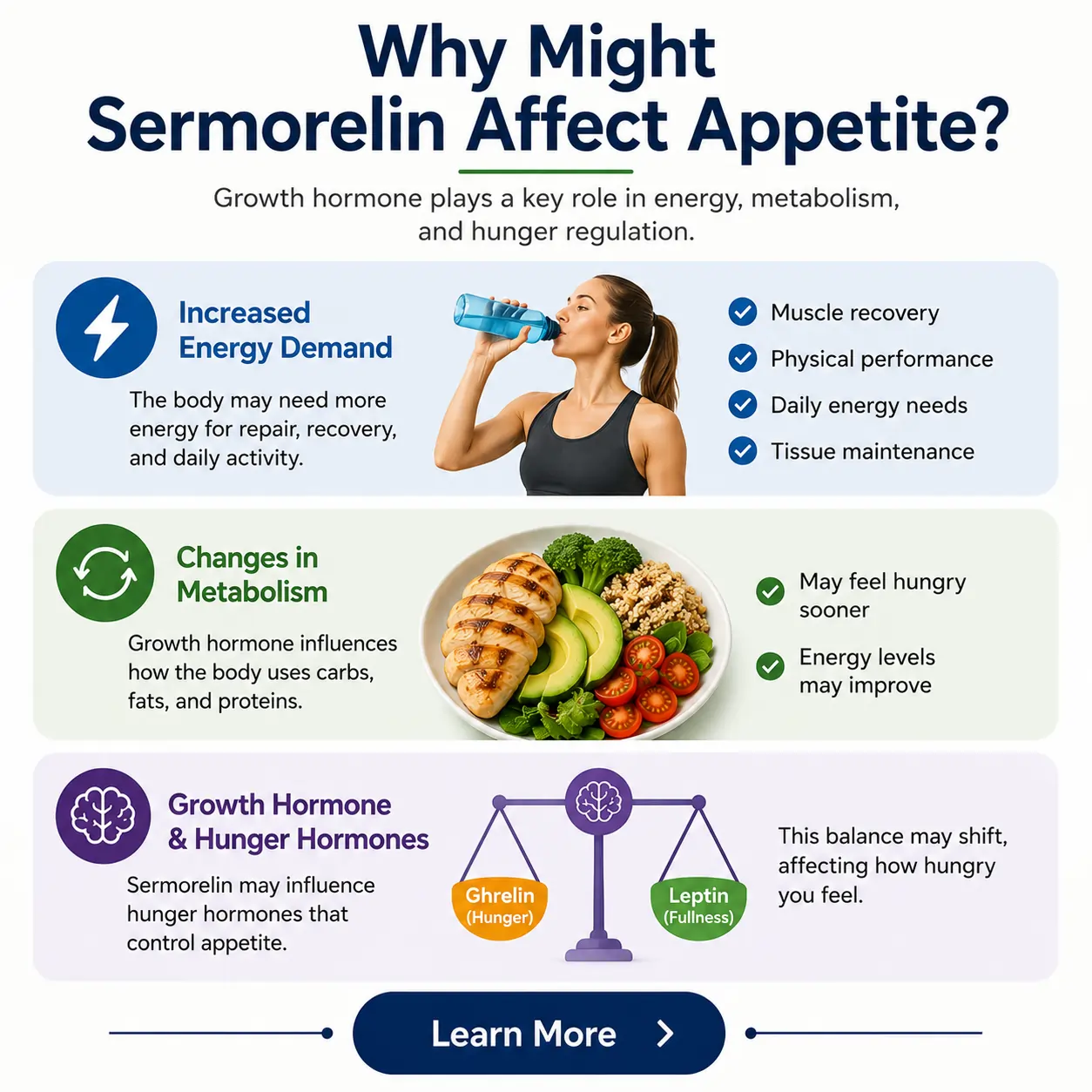
Why Might Sermorelin Affect Appetite?
To understand why hunger may change, it helps to look at the relationship between growth hormone and metabolism.
Growth hormone influences several systems involved in energy regulation. When growth hormone levels change, the body may adjust how it uses stored energy, repairs tissues, and responds to physical demands.
➱Increased Energy Demand
One possible reason for feeling hungrier is that the body may require more energy when certain metabolic processes become more active.
When the body is working toward repair and recovery, it may create stronger signals for nutritional intake.
For example, someone who increases exercise while using Sermorelin may naturally require more calories to support:
- Muscle recovery
- Physical performance
- Daily energy needs
- Tissue maintenance
➱Changes in Metabolism
Metabolism refers to the processes your body uses to convert food into energy. Hormonal signals can influence how efficiently the body uses carbohydrates, fats, and proteins.
Because growth hormone plays a role in metabolic regulation, changes in growth hormone activity may affect appetite patterns.
Some people may notice they feel hungry sooner between meals, while others may experience improved energy without appetite changes.
➱Relationship Between Growth Hormone and Hunger Hormones
Appetite is controlled by a complex network involving the brain, digestive system, and hormones.
Two important hormones involved in hunger regulation are:
- Ghrelin, often associated with hunger signals
- Leptin, involved in fullness and energy balance
Because Sermorelin affects the growth hormone pathway, some individuals may experience noticeable changes in hunger perception.
Sermorelin and Weight Changes: Does More Hunger Mean Weight Gain?
A common concern is whether increased hunger from Sermorelin automatically leads to weight gain.
Body weight changes depend on overall calorie balance, activity levels, nutrition choices, and lifestyle habits.
Some individuals use Sermorelin as part of a broader wellness approach focused on:
- Maintaining muscle
- Supporting healthy metabolism
- Improving recovery
- Encouraging better physical performance
If increased appetite leads to excessive calorie intake, weight gain may occur. However, if hunger is managed through balanced meals and healthy routines, appetite changes may not negatively affect body goals.
Does Sermorelin Increase Appetite More at Night?
Some people who use Sermorelin notice changes in hunger patterns during the evening or nighttime hours.
This experience may be related to the natural relationship between growth hormone release, sleep cycles, and the body’s daily rhythm.
Since Sermorelin supports the body’s natural growth hormone signaling pathway, some individuals may become more aware of changes connected with sleep, recovery, and appetite.
Nighttime hunger can also be influenced by everyday habits, including:
- Eating too few calories during the day
- Skipping meals
- Increased physical activity
- Poor sleep quality
- Stress levels
- Changes in daily routine
For example, someone who begins exercising more regularly while using Sermorelin may experience stronger evening hunger because the body needs additional nutrients for recovery.
The Connection Between Sermorelin, Sleep, and Hunger
Sleep plays an important role in appetite regulation, and Sermorelin is often discussed in relation to healthy sleep patterns.
During deep sleep, the body naturally releases growth hormone. This process supports several important functions, including tissue repair, recovery, and metabolic activity.
When sleep quality improves, some people may notice positive changes in:
- Morning energy
- Exercise recovery
- Daily motivation
- Hunger awareness
On the other hand, poor sleep can influence appetite by affecting hunger-related hormones and increasing cravings for high-calorie foods.
This is why sleep quality is an important factor when evaluating appetite changes while using Sermorelin.
Factors That Can Influence Hunger While Using Sermorelin
Appetite responses vary widely between individuals. Several factors may determine whether someone notices increased hunger.
💠Diet Quality
The foods you eat each day can strongly affect hunger levels. A diet that includes adequate protein, fiber, healthy fats, and nutrient-rich foods may help maintain balanced appetite signals.
People who rely heavily on processed foods or skip balanced meals may experience stronger hunger fluctuations regardless of Sermorelin use.
💠Exercise Routine
Physical activity can influence appetite because the body requires energy to support movement and recovery.
People who begin strength training, resistance exercises, or more intense workouts may notice increased hunger.
Exercise combined with proper nutrition may also support goals related to muscle maintenance and overall physical performance.
💠Age and Hormonal Changes
Hormone levels naturally change throughout life. As people age, growth hormone production may decline, and this shift can affect recovery, body composition, and energy levels.
A healthcare provider can evaluate whether Sermorelin is appropriate based on individual circumstances.
💠Stress Levels
Stress can have a major impact on appetite. High stress levels may increase cravings, affect eating patterns, and influence sleep quality.
Because stress affects multiple body systems, it can sometimes make it difficult to determine whether hunger changes are connected to Sermorelin or other daily factors.
Managing stress through healthy routines may help support balanced appetite control.

How To Manage Increased Hunger While Using Sermorelin
If you notice increased hunger after starting Sermorelin, several healthy strategies may help maintain balanced eating habits.
🌟Prioritize Protein-Rich Foods
Protein helps support fullness and provides important nutrients for muscle maintenance. Including protein sources in meals may help manage hunger throughout the day.
Examples include:
- Eggs
- Fish
- Lean meats
- Greek yogurt
- Beans
- Plant-based protein sources
A balanced approach can help prevent frequent snacking caused by inadequate nutrition.
🌟Include Fiber-Rich Foods
Fiber supports digestion and may help you feel satisfied after meals. Foods such as vegetables, fruits, legumes, and whole grains can contribute to a balanced eating pattern.
🌟Maintain Regular Meal Timing
Skipping meals may lead to stronger hunger signals later in the day. Creating a consistent meal schedule can help maintain stable energy levels and reduce sudden cravings.
Many people find that planned meals make it easier to manage appetite changes.
🌟Stay Hydrated
Thirst is sometimes mistaken for hunger. Drinking enough water throughout the day supports overall wellness and may help distinguish between true hunger and temporary cravings.
Hydration is especially important for people who exercise regularly.
Is Increased Hunger A Sign That Sermorelin Is Working?
Appetite changes are only one possible experience and should not be used as the main measure of results.
People may evaluate their progress through several factors, such as:
- Energy levels
- Recovery after activity
- Sleep quality
- Physical performance
- Overall wellness goals
The response to Sermorelin should be evaluated with guidance from a healthcare professional who understands your individual health profile.
Can Sermorelin Help With Fat Loss?
Sermorelin is sometimes discussed in connection with healthy body composition goals because growth hormone plays a role in metabolism and body tissues.
Healthy body composition changes usually involve multiple factors, including:
- Balanced nutrition
- Regular exercise
- Quality sleep
- Stress management
- Consistent lifestyle habits
Some people may combine Sermorelin with healthy routines to support their wellness goals, but results can vary.
What Should You Do If Hunger Becomes Difficult To Manage?
If appetite changes become uncomfortable or interfere with daily life, it is important to discuss them with a healthcare professional.
A provider may review factors such as:
- Current dosage
- Lifestyle habits
- Nutrition patterns
- Sleep quality
- Other health considerations
Small lifestyle changes, such as improving meal quality and maintaining regular routines, may help many people manage appetite changes successfully.

Safety Considerations Before Using Sermorelin
Understanding how your body responds to Sermorelin is an important part of making informed decisions about your health.
Although Sermorelin is designed to support the body’s natural growth hormone pathway, individual responses can vary.
Before beginning Sermorelin, it is important to discuss your health history, current medications, existing conditions, and personal wellness goals with a qualified healthcare professional.
A provider may consider factors such as:
- Current hormone levels
- Overall health status
- Lifestyle habits
- Medical history
- Personal goals
This evaluation helps determine whether Sermorelin is a suitable option for an individual’s specific needs.
Final Thoughts: Does Sermorelin Make You Hungry?
Sermorelin influences the body’s natural growth hormone signaling, which is connected with metabolism, recovery, and energy regulation.
The best way to approach Sermorelin is with realistic expectations, healthy lifestyle habits, and professional guidance.
Balanced nutrition, regular movement, quality sleep, and consistent routines all play an important role in supporting overall wellness.
If you are considering Sermorelin or experiencing appetite changes after starting it, speaking with a qualified healthcare provider can help you understand your individual response and make informed decisions.
Understanding how your body reacts is the most important step toward creating a personalized approach that supports your long-term health goals.

.
