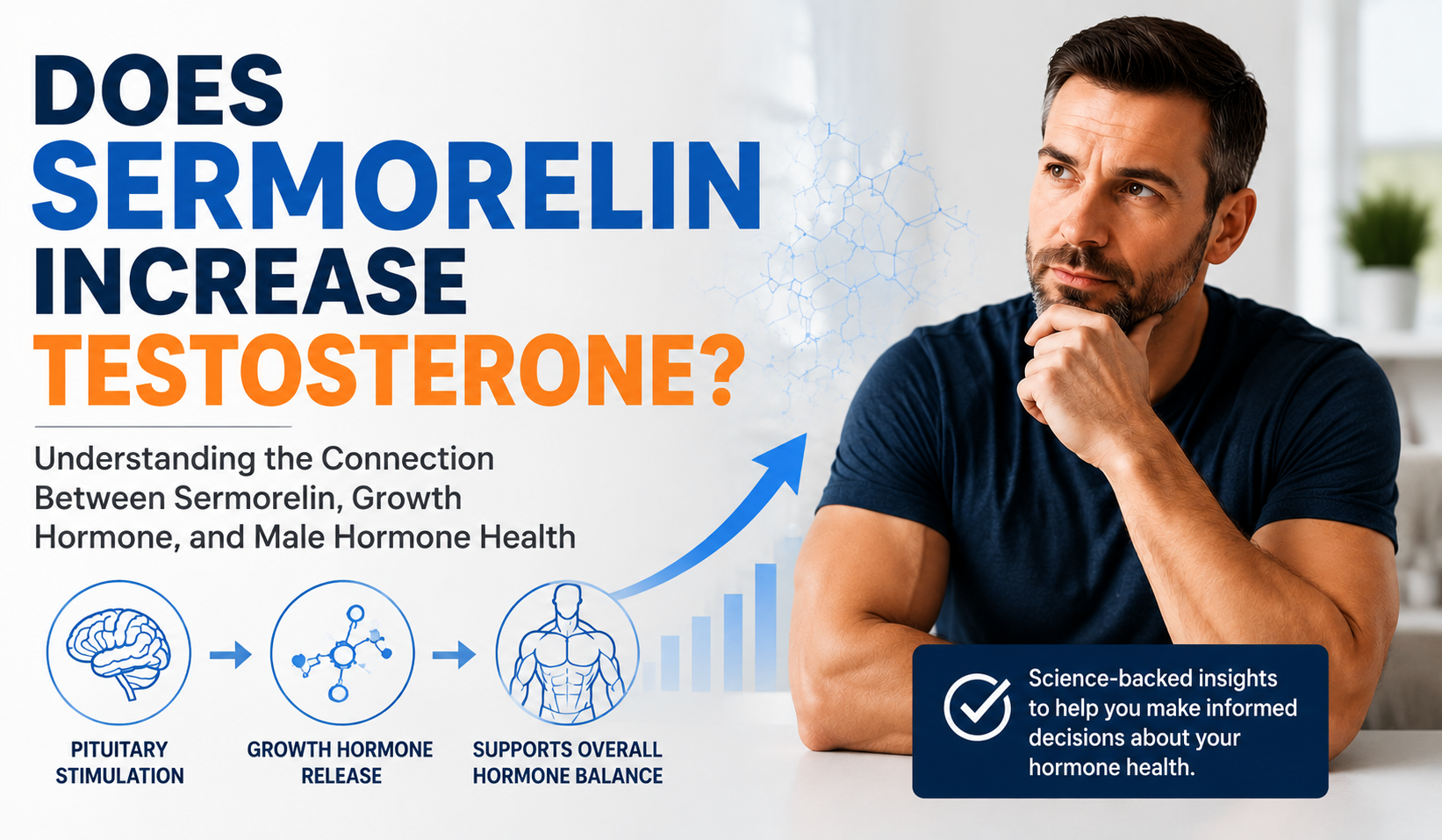
Does Sermorelin increase testosterone? Learn how Sermorelin affects growth hormone, hormone balance, muscle support, and male health with expert insights.
Introduction
Sermorelin is a peptide therapy that works through the body’s natural growth hormone pathway.
It is designed to stimulate the pituitary gland to release growth hormone, which plays an important role in several biological processes, including tissue repair, metabolism, and body composition.
However, sermorelin is not the same as testosterone replacement therapy. Testosterone and growth hormone are different hormones with different functions.
While they interact within the body’s endocrine system, sermorelin does not directly replace testosterone or act as a testosterone medication.
Understanding the relationship between sermorelin and testosterone requires examining how these hormones interact, what sermorelin does in the body, and what realistic outcomes to expect.
What Is Sermorelin?
Sermorelin is a synthetic peptide that is designed to mimic a naturally occurring hormone called growth hormone-releasing hormone (GHRH).
GHRH is produced naturally by the hypothalamus and sends signals to the pituitary gland to release growth hormone.
The pituitary gland is a small gland located at the base of the brain that controls several important hormonal functions.
When sermorelin activates growth hormone pathways, it encourages the pituitary gland to increase the release of naturally produced growth hormone.
Growth hormone then stimulates the production of insulin-like growth factor-1 (IGF-1), which contributes to many growth and repair processes throughout the body.
Sermorelin is commonly discussed in relation to:
- Healthy aging support
- Muscle maintenance
- Physical recovery
- Body composition goals
- Sleep quality support
- Overall wellness
The key difference is that sermorelin works by encouraging the body’s own hormone signaling process. It does not directly supply testosterone to the body.
Understanding Testosterone and Its Role in the Body
Testosterone is one of the primary hormones involved in male health. Although it is often associated with men, women also produce smaller amounts of testosterone that contribute to normal biological functions.
In men, testosterone plays several important roles, including:
- Supporting muscle development
- Maintaining bone strength
- Supporting energy levels
- Contributing to sexual health
- Supporting mood and motivation
- Helping maintain normal body composition
Testosterone production is controlled by the hypothalamic-pituitary-gonadal (HPG) axis.
This system involves communication between:
- The hypothalamus in the brain
- The pituitary gland
- The testes
The hypothalamus releases signals that stimulate the pituitary gland to produce hormones that tell the testes to create testosterone.
Because hormones act through interconnected systems, changes in one pathway can sometimes influence other aspects of endocrine function.
This is why people often wonder whether supporting growth hormone pathways with sermorelin may affect testosterone levels.
Does Sermorelin Increase Testosterone?
The short answer is: sermorelin may support aspects of hormone health, but it is not a direct testosterone booster.
Sermorelin primarily affects growth hormone release, not testosterone production. Its main action is stimulating the pituitary gland to release growth hormone naturally.
Some individuals may notice improvements in areas connected with healthy hormone function, including:
- Better recovery after exercise
- Improved energy
- Increased lean muscle support
- Better sleep quality
- Improved physical performance
These effects may indirectly influence overall wellness and how someone feels. However, sermorelin should not be considered a replacement for testosterone therapy.
If someone has clinically low testosterone, a healthcare provider may evaluate testosterone levels and recommend appropriate treatment options.
The relationship between sermorelin and testosterone is indirect. By supporting growth hormone activity, sermorelin may help create a healthier internal environment where multiple body systems function more effectively.
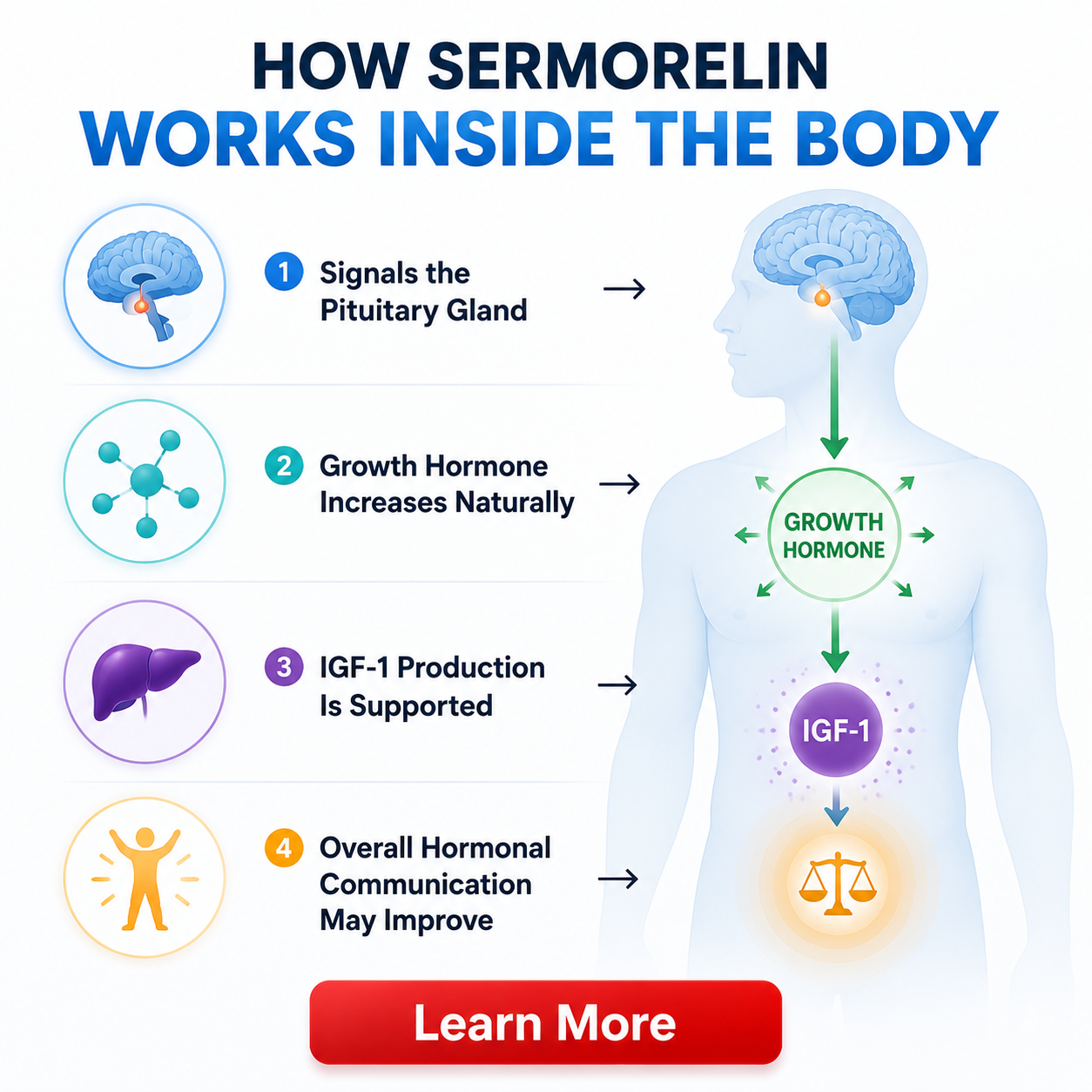
How Sermorelin Works Inside the Body
Sermorelin follows the body’s natural growth hormone signaling pathway.
After administration, sermorelin signals the pituitary gland to release of growth hormone.
The process generally involves:
1. Sermorelin Signals the Pituitary Gland
Sermorelin acts similarly to natural growth hormone-releasing hormone. It signals the pituitary gland to release stored growth hormone.
2. Growth Hormone Levels Increase Naturally
The released growth hormone travels throughout the body and supports important biological processes.
Growth hormone is involved in:
- Cell repair
- Muscle maintenance
- Fat metabolism
- Tissue growth
- Recovery processes
3. IGF-1 Production Is Supported
Growth hormone stimulates the liver and other tissues to produce IGF-1.
IGF-1 helps support processes involved in:
- Muscle development
- Tissue maintenance
- Cellular activity
4. Overall Hormonal Communication May Improve
Because the endocrine system is interconnected, supporting one hormone pathway may influence overall balance and wellness.
However, individual responses can vary depending on age, genetics, lifestyle, existing hormone levels, and overall health.
The Relationship Between Growth Hormone and Testosterone
Growth hormone and testosterone are two separate hormones, but they often work together in the body.
During younger years, the body naturally produces higher levels of many hormones. As people age, levels of growth hormone and testosterone may gradually decline.
This natural change is one reason some adults explore hormone-supporting approaches.
Growth hormone helps regulate processes related to tissue repair and metabolism, while testosterone plays a major role in male reproductive and muscle-related functions.
Supporting healthy growth hormone signaling does not automatically mean testosterone levels will increase. However, improving overall hormone health may contribute to better physical function and wellness.
Can Sermorelin Improve Symptoms Associated With Low Testosterone?
Some symptoms commonly associated with low testosterone overlap with symptoms related to other health factors.
These may include:
- Low energy
- Reduced exercise performance
- Difficulty maintaining muscle
- Changes in body composition
- Poor sleep quality
- Reduced motivation
A person may feel better because of improved recovery, sleep quality, metabolism, or overall wellness.
For anyone concerned about testosterone levels, proper evaluation through blood testing and healthcare guidance is important.
Factors That Influence Testosterone Levels Naturally
Testosterone levels are affected by many lifestyle and health factors. Even when using hormone-supporting treatments, daily habits remain important.
➱ Quality Sleep
Sleep plays a major role in hormone regulation. Poor sleep patterns may negatively affect testosterone production and overall energy. Consistent sleep schedules and adequate rest support healthy endocrine function.
➱ Strength Training
Resistance exercise is strongly associated with maintaining muscle health and supporting healthy testosterone levels. Regular strength training helps preserve lean muscle and physical performance.
➱ Balanced Nutrition
A nutrient-rich diet supports hormone production and overall health. Adequate protein, healthy fats, vitamins, and minerals contribute to normal biological processes.
➱ Stress Management
Chronic stress can affect hormone balance. High levels of stress hormones may interfere with normal testosterone production and overall wellness.
➱ Healthy Body Composition
Maintaining a healthy weight can support better hormone function. Excess body fat may influence hormone metabolism and reduce optimal hormonal balance.
Sermorelin vs Testosterone Therapy: What Is the Difference?
Many people confuse sermorelin with testosterone replacement therapy, but they work through different mechanisms.
| Feature | Sermorelin | Testosterone Therapy |
| Primary Target | Growth hormone pathway | Testosterone levels |
| Main Action | Encourages natural growth hormone release | Provides testosterone support |
| Hormone Affected | Growth hormone | Testosterone |
| Common Focus | Recovery, aging support, body composition | Low testosterone management |
| Direct Testosterone Increase | Not the primary function | Yes |
Sermorelin supports the body’s natural growth hormone production process. Testosterone therapy directly increases testosterone availability.
The right option depends on individual hormone levels, health goals, and medical evaluation.
Potential Benefits Associated With Sermorelin
Although sermorelin does not directly function as a testosterone treatment, supporting growth hormone pathways may provide several potential wellness benefits.
➤ Supports Muscle Maintenance
Growth hormone contributes to muscle-related processes. Some individuals use sermorelin as part of a broader approach to maintaining strength and physical function as they age.
➤ Supports Exercise Recovery
Growth hormone plays a role in tissue repair and recovery. Some people explore sermorelin to support recovery after physical activity.
➤ Supports Healthy Fat Metabolism
Growth hormone influences how the body processes fat. Supporting healthy growth hormone activity may contribute to improved body composition when combined with proper lifestyle habits.
➤ Supports Sleep Quality
Growth hormone release naturally occurs during deep sleep. Supporting healthy hormone rhythms may contribute to better sleep-related wellness.
➤ Supports Overall Vitality
Some individuals report improvements in energy and general well-being while following a medically supervised sermorelin plan.

Does Sermorelin Help Men Over 40?
Many men become interested in sermorelin as they enter their 40s, 50s, and beyond because hormone levels naturally change with age.
Sermorelin is sometimes considered by individuals seeking to support natural hormone signaling.
For men over 40, maintaining healthy habits is equally important. Exercise, nutrition, stress management, and proper sleep all contribute to healthy aging.
A healthcare provider can help determine whether sermorelin is appropriate based on personal health history and goals.
Can Sermorelin and Testosterone Be Used Together?
In some cases, healthcare providers may evaluate combinations of hormone-related treatments depending on a person’s needs.
Sermorelin and testosterone therapy affect different hormonal pathways.
A medical professional may consider factors such as:
- Current hormone levels
- Age
- Symptoms
- Medical history
- Treatment goals
Hormone management should always be personalized because each person’s endocrine system responds differently.
What Research Says About Sermorelin and Testosterone
Research on sermorelin has primarily focused on its ability to stimulate growth hormone release and support growth hormone-related pathways.
Studies have shown that growth hormone-releasing hormone analogs can influence growth hormone secretion.
However, sermorelin research does not establish it as a direct testosterone-enhancing medication.
The current understanding is that sermorelin affects growth hormone pathways, while testosterone production is regulated through separate mechanisms.
More research continues to explore how different hormones interact and influence healthy aging.
Who May Consider Sermorelin?
Sermorelin may be considered by adults interested in supporting areas related to healthy aging and hormone wellness.
A healthcare provider may evaluate whether it fits someone’s goals.
People commonly interested in sermorelin include those focusing on:
- Maintaining physical performance
- Supporting recovery
- Improving body composition
- Promoting healthy aging
- Supporting overall vitality
It is important to have realistic expectations. Sermorelin is not designed to create dramatic hormone changes overnight.
Results depend on individual factors and consistent healthy lifestyle choices.
Important Considerations Before Using Sermorelin
Before starting Sermorelin, individuals should discuss their health history with a qualified healthcare professional.
Important considerations may include:
- Existing medical conditions
- Current medications
- Hormone levels
- Treatment goals
- Potential risks and benefits
Professional guidance helps ensure that treatment decisions are based on individual needs.
Final Thoughts
Sermorelin does not directly increase testosterone because its primary role is supporting the body’s natural growth hormone pathway.
It works by signaling the pituitary gland to release growth hormone, which supports processes related to recovery, metabolism, and healthy aging.
I highly recommend understanding sermorelin as a growth hormone-supporting treatment rather than a testosterone replacement option.
Individuals experiencing symptoms of low testosterone should seek proper hormone testing and medical guidance to identify the right approach.
When combined with healthy lifestyle habits, appropriate nutrition, regular exercise, and professional supervision, sermorelin may be a valuable option for adults looking to support their long-term wellness goals.
The best results come from choosing a personalized approach based on your body, health history, and specific needs.

.
