Best Toothpaste for Bad Breath (✨FRESH BREATH CARE!) Discover simple toothpaste choices that may support fresher breath and cleaner teeth.

Bad breath can be frustrating, especially when it keeps coming back shortly after brushing your teeth. It can affect conversations, social situations, work, and even your confidence.
Although many people immediately reach for a strong mint-flavored toothpaste, fresh breath is about more than simply making your mouth smell minty.
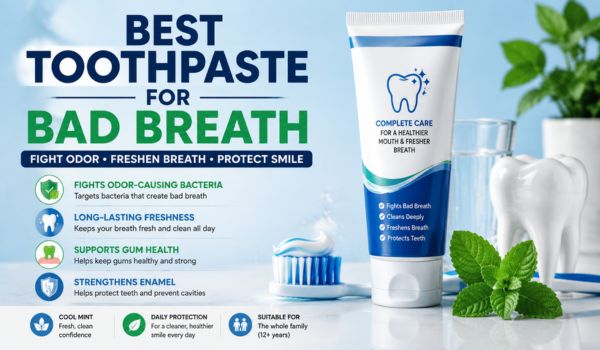
The best toothpaste for bad breath should support good oral hygiene while helping clean away plaque, food particles, and bacteria that can contribute to unpleasant odors.
Bad breath, medically known as halitosis, can have several possible causes. Poor oral hygiene, bacteria on the tongue, gum problems, dry mouth, trapped food, smoking, certain foods, and some health conditions can all contribute.
Choosing the right toothpaste is therefore only one part of a complete approach to fresher breath.
Ingredients such as fluoride, baking soda, zinc compounds, and certain antibacterial ingredients may be found in toothpaste formulas designed to support oral cleanliness and breath freshness.
This guide explains what to look for when choosing toothpaste for bad breath, which ingredients may be helpful, how to brush effectively, and when persistent bad breath may require professional attention.
What Causes Bad Breath?
Bad breath usually develops when bacteria in the mouth break down food particles, proteins, and other substances.
During this process, bacteria can produce unpleasant-smelling compounds. These odors can become more noticeable when oral hygiene is poor or when the mouth becomes dry.
Common causes of bad breath include:
- Plaque buildup
- Bacteria on the tongue
- Food trapped between teeth
- Gum disease
- Tooth decay
- Dry mouth
- Smoking or tobacco use
- Certain foods
- Poor oral hygiene
- Some medications
- Certain medical conditions
The tongue can be particularly important because its textured surface provides many places where bacteria and debris can accumulate.
This means brushing your teeth alone may not always be enough to address persistent breath odor.
What Is the Best Toothpaste for Bad Breath?
There is no single toothpaste that is universally the best for everyone. Instead, the ideal toothpaste depends on your oral-health needs and the ingredients in the formula.
For everyday use, many adults may benefit from a fluoride toothpaste because fluoride helps strengthen tooth enamel and prevent cavities.
If bad breath is the primary concern, you may also want to consider formulas containing ingredients such as:
- Baking soda
- Zinc compounds
- Antibacterial ingredients
- Odor-neutralizing ingredients
- Ingredients designed to control plaque
A toothpaste that supports overall oral health is generally more useful than one that simply provides a strong mint flavor.
Ingredients to Look for in Toothpaste for Bad Breath
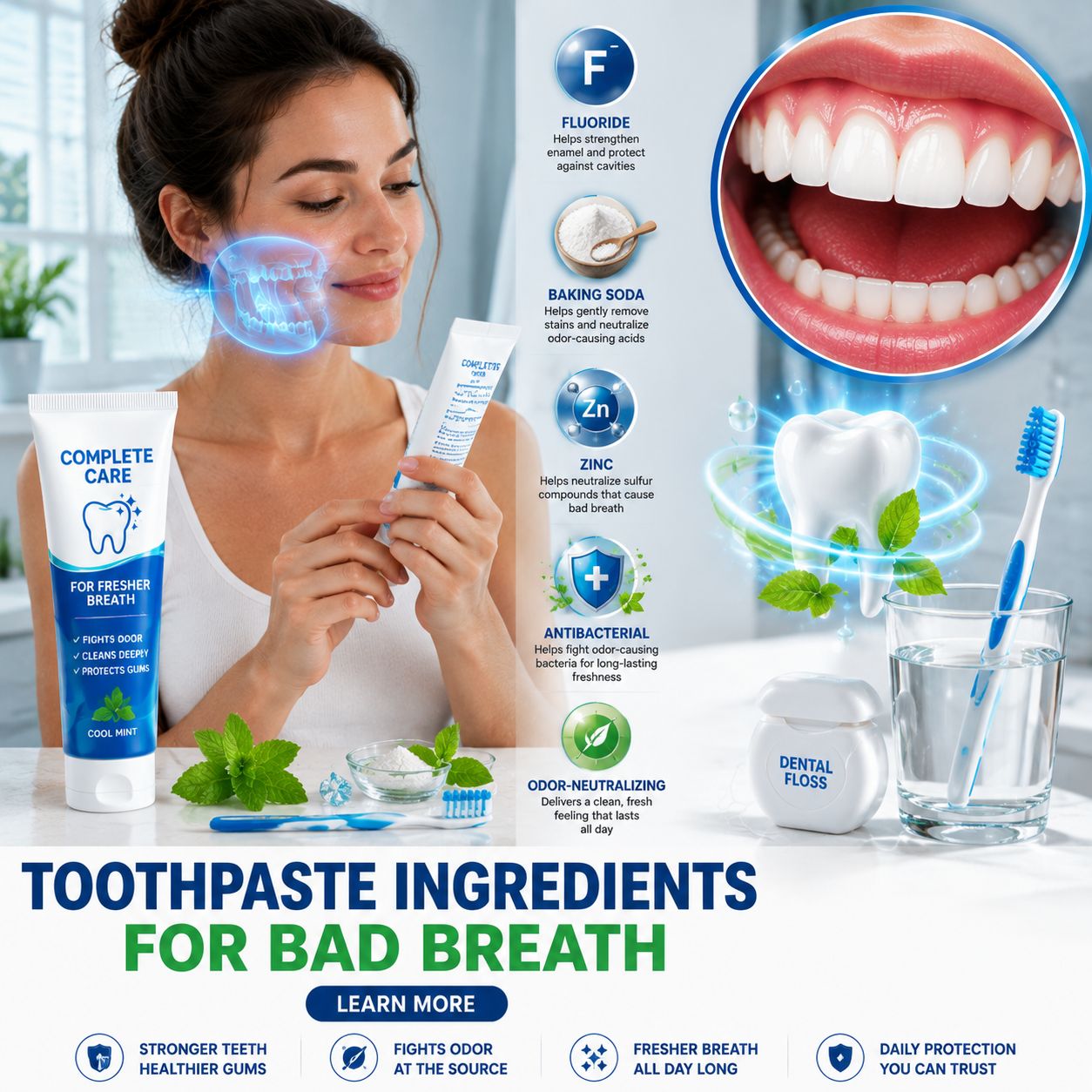
Understanding toothpaste ingredients can make it easier to compare products.
🦷 Fluoride
Helps strengthen tooth enamel and supports everyday cavity protection for healthier teeth and gums.
✨ Baking Soda
May help clean surface debris and neutralize certain unpleasant odors, supporting a fresher-feeling mouth.
🛡️ Zinc
May help target sulfur-containing compounds associated with unpleasant breath and support freshness.
🧼 Antibacterial Ingredients
May help control oral bacteria that can contribute to plaque buildup and unpleasant breath.
🌿 Odor-Neutralizing Ingredients
Designed to help neutralize odor-causing compounds instead of simply covering bad breath with a strong flavor.
Why Mint Toothpaste Does Not Always Solve Bad Breath?
Many people use mint toothpaste because it creates an immediate feeling of freshness, but the cooling sensation does not always address the actual causes of bad breath.
Mint flavor can temporarily mask unpleasant odors, but it may not remove the bacteria, plaque buildup, or food particles that contribute to ongoing mouth odor.
Bad breath often develops from odor-producing bacteria found on the tongue, between teeth, and along the gumline.
If a toothpaste only provides a strong mint taste without supporting deeper oral cleaning, the freshness may fade quickly after brushing.
For more effective breath care, choose a toothpaste that focuses on reducing odor-causing bacteria, maintaining oral cleanliness, and supporting overall dental health.
A complete oral hygiene routine, including brushing twice daily, cleaning the tongue, flossing, staying hydrated, and regular dental checkups, can provide better long-term support for fresher breath.
How to Choose the Best Toothpaste for Bad Breath?
Choosing the best toothpaste for bad breath is easier when you focus on the ingredients, your oral-health needs, and how well the toothpaste fits into your daily routine.
Look for Fluoride
- Fluoride helps strengthen tooth enamel and protect against cavities, making it an important ingredient for everyday oral health and cleaner teeth.
Consider Baking Soda or Zinc
- Baking soda may help clean surface debris and neutralize certain odors, while zinc may help target compounds associated with unpleasant breath.
Check Your Oral-Health Needs
- If you have sensitive teeth, gum concerns, dry mouth, or frequent cavities, choose a toothpaste that supports those specific needs instead of focusing only on breath freshness.
Avoid Choosing Only by Flavor
- A strong mint flavor can create a temporary feeling of freshness, but it may not address bacteria, plaque, tongue buildup, or other causes of bad breath.
Choose a Toothpaste You Can Use Consistently
- The best toothpaste is one that feels comfortable and allows you to brush twice a day properly. Consistency is an important part of maintaining good oral hygiene.
Consider Professional Advice
- If bad breath continues even after improving your oral-care routine, speak with a dentist. Persistent odor may be linked to gum problems, tooth decay, dry mouth, or another underlying issue.
How to Brush Your Teeth for Better Breath?
Even the best toothpaste will not work effectively if brushing is rushed. For better results, brush your teeth twice a day using gentle movements.
Hold the toothbrush at an angle toward the gumline and carefully clean all surfaces.
Make sure you brush:
- Front teeth
- Back teeth
- Chewing surfaces
- Gumline
- Areas around dental work
- Your tongue
Spend approximately two minutes brushing.
Avoid aggressive scrubbing because excessive pressure can irritate the gums and potentially contribute to tooth wear. Consistent technique is more important than simply brushing harder.
Don’t Forget to Clean Your Tongue
The tongue can collect bacteria, food particles, dead cells, and surface buildup that may contribute to unpleasant breath.
Even if you brush your teeth regularly, ignoring your tongue can allow odor-causing bacteria to remain in the mouth.
The tongue can collect:
- Bacteria
- Food particles
- Dead cells
- Mucus
- Surface coating
This buildup may contribute to unpleasant breath. After brushing your teeth, gently brush your tongue or use a tongue scraper.
There is no need to press extremely hard. Gentle, consistent cleaning is enough for most people.
Flossing Is Important for Bad Breath
| Ingredient | Main Purpose | Potential Breath Benefit |
|---|---|---|
| Fluoride | Cavity protection | Supports healthy teeth and overall oral hygiene |
| Baking Soda | Cleaning and odor neutralization | May help reduce certain unpleasant odors |
| Zinc | Odor-compound control | May help target compounds linked with bad breath |
| Antibacterial Ingredients | Bacterial and plaque control | May help reduce bacteria that contribute to odor |
| Mint Flavor | Fresh taste | Provides a temporary feeling of freshness |
| Desensitizing Ingredients | Sensitivity support | Useful when tooth sensitivity is also a concern |
Can Baking Soda Toothpaste Help Bad Breath?
Baking soda is one of the most commonly discussed ingredients when it comes to fresh-breath toothpaste. It can help clean the teeth and may neutralize some odors.
For people who enjoy baking soda toothpaste, it can be a reasonable option as part of a regular oral-care routine.
However, it is important to remember that baking soda toothpaste does not necessarily address every possible cause of bad breath.
If gum disease, tooth decay, dry mouth, or another condition is responsible for the odor, changing toothpaste alone may not solve the problem.
Bad Breath and Dry Mouth
Dry mouth can be an important contributor to bad breath because saliva naturally helps wash away food particles, bacteria, and other debris from the mouth.
When saliva production decreases, these substances can remain in the mouth longer and may contribute to unpleasant odors.
Dry mouth can be caused by dehydration, certain medications, mouth breathing, stress, or some health conditions.
Dry mouth can occur because of:
- Dehydration
- Certain medications
- Mouth breathing
- Stress
- Some health conditions
Drinking enough water and maintaining good oral hygiene may help. Sugar-free gum can also stimulate saliva production for some people.
If persistent dry mouth is bothering you, speak with a healthcare or dental professional.
Foods That Can Affect Your Breath
Certain foods can temporarily change the way your breath smells because their compounds can remain in the mouth or enter the bloodstream and later be released through breathing.
This does not necessarily mean you have poor oral hygiene.
Common examples include:
- Garlic
- Onions
- Strong spices
- Coffee
- Some alcoholic beverages
Their odor-producing compounds can remain noticeable for some time after consumption.
Drinking water, maintaining regular oral hygiene, and cleaning your tongue can help manage everyday food-related breath odor.
Morning Breath: Why Does It Happen?
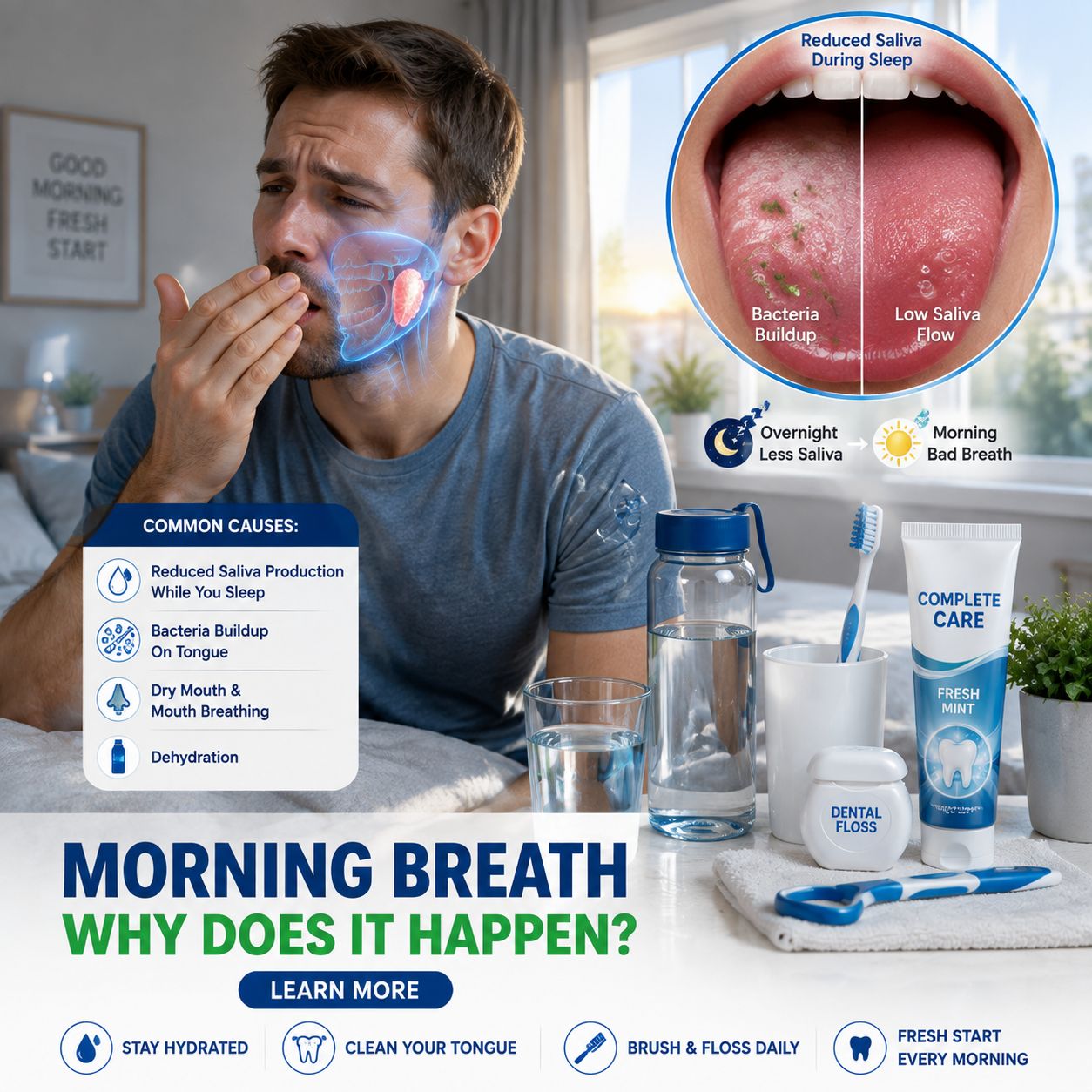
Morning breath is extremely common. During sleep, saliva production generally decreases. This creates an environment where bacteria can remain in the mouth for several hours.
Mouth breathing can make morning dryness and odor more noticeable.
A simple morning routine can help:
- Drink water.
- Brush your teeth.
- Clean your tongue.
- Clean between your teeth regularly.
- Continue normal oral hygiene throughout the day.
If unusually strong breath continues throughout the day despite good oral care, consider discussing it with your dentist.
Mouthwash vs. Toothpaste for Bad Breath
Mouthwash and toothpaste have different roles.
- Toothpaste: Helps remove plaque, food particles, and bacteria while brushing and supports overall oral hygiene.
- Mouthwash: Provides additional breath-freshening support and may help control certain odor-causing bacteria, depending on the formula.
- Toothpaste Is Essential: Regular brushing with a suitable toothpaste is the foundation of daily oral care and should not be replaced by mouthwash.
- Mouthwash is an Extra Step: Mouthwash can be added to your routine for additional freshness, but it does not replace brushing or flossing.
- Best Approach: Use toothpaste twice daily, clean your tongue, floss regularly, stay hydrated, and use mouthwash when appropriate for your needs.
- Persistent Bad Breath: If unpleasant breath continues despite proper oral hygiene, consult a dentist to check for an underlying dental or health-related cause.
Can Toothpaste Permanently Cure Bad Breath?
Toothpaste should not be considered a permanent cure for chronic bad breath. It can help clean the mouth and reduce plaque and debris that may contribute to odor.
But persistent halitosis may have another underlying cause.
Potential causes include:
- Gum disease
- Tooth decay
- Dry mouth
- Oral infections
- Poorly cleaned dental appliances
- Sinus-related problems
- Certain medications
- Other medical conditions
If bad breath continues despite good oral hygiene, identifying the cause is more important than repeatedly changing toothpaste.
Common Mistakes That Can Make Bad Breath Worse
Brushing Too Quickly
- Rushing through your brushing routine can leave plaque, bacteria, and food particles behind. Taking enough time to clean all areas of your mouth can support better breath freshness.
Ignoring Your Tongue
- The tongue can collect bacteria, food debris, and dead cells that may contribute to unpleasant odors. Gently cleaning your tongue can help reduce this buildup.
Skipping Flossing
- Food particles and plaque can become trapped between your teeth where a toothbrush cannot reach. Regular flossing helps clean these areas and supports better oral hygiene.
Using Mint Only to Mask Odor
- A strong mint flavor can create a temporary feeling of freshness, but it may not address bacteria, plaque, or other factors responsible for bad breath.
Not Drinking Enough Water
- Dry mouth can allow bacteria and debris to remain in the mouth longer. Drinking enough water throughout the day can help support normal saliva flow.
Ignoring Gum Problems
- Bleeding, swollen, or tender gums may be signs of an oral-health problem that can contribute to unpleasant breath. These symptoms should be discussed with a dental professional.
Skipping Dental Checkups
- Persistent bad breath may sometimes be related to cavities, gum disease, or other dental concerns. Regular dental checkups can help identify problems and provide appropriate treatment.
Best Daily Routine for Fresh Breath
You do not generally need to change toothpaste simply because you have been using the same product for a long time.
If the toothpaste is appropriate for your oral-health needs and you are using it consistently, there may be no reason to switch.
Consider changing products if:
- Your dental needs have changed
- You develop tooth sensitivity
- Your dentist recommends another formula
- You dislike the texture or flavor
- You want a toothpaste with a different active ingredient
The most important thing is finding a toothpaste you can comfortably use twice a day.
When Should You See a Dentist for Bad Breath?
Occasional bad breath is usually not a major concern. Persistent bad breath deserves more attention.
Consider scheduling a dental appointment if you experience:
- Breath odor that does not improve with good hygiene
- Bleeding gums
- Swollen gums
- Tooth pain
- Tooth sensitivity
- Loose teeth
- Persistent dry mouth
- A constant unpleasant taste
- Visible plaque or buildup
- Repeated mouth infections
A dental professional can examine your teeth, gums, tongue, and other oral structures to determine whether a dental problem may be responsible.
How to Keep Your Toothbrush Clean?
Your toothbrush can also become contaminated with bacteria over time.
After brushing:
- Rinse the toothbrush thoroughly.
- Store it upright when possible.
- Allow it to air dry.
- Avoid covering it while it is still wet.
- Replace the toothbrush or brush head regularly.
If your toothbrush becomes worn or the bristles become damaged, replacing it can help maintain effective cleaning.
Best Toothpaste for Bad Breath: What Really Matters?
When comparing different products, focus on the complete oral-care formula rather than marketing claims.
A good everyday toothpaste should ideally:
- Help clean plaque
- Support cavity prevention
- Be comfortable using
- Fit your dental needs
- Support overall oral hygiene
- Include useful ingredients for your specific concerns
For people focused on breath freshness, ingredients such as baking soda or zinc may be worth considering.