Vicks VapoRub for Alzheimer’s Disease: Natural Ways to Support Memory, Brain Health, and Cognitive Function
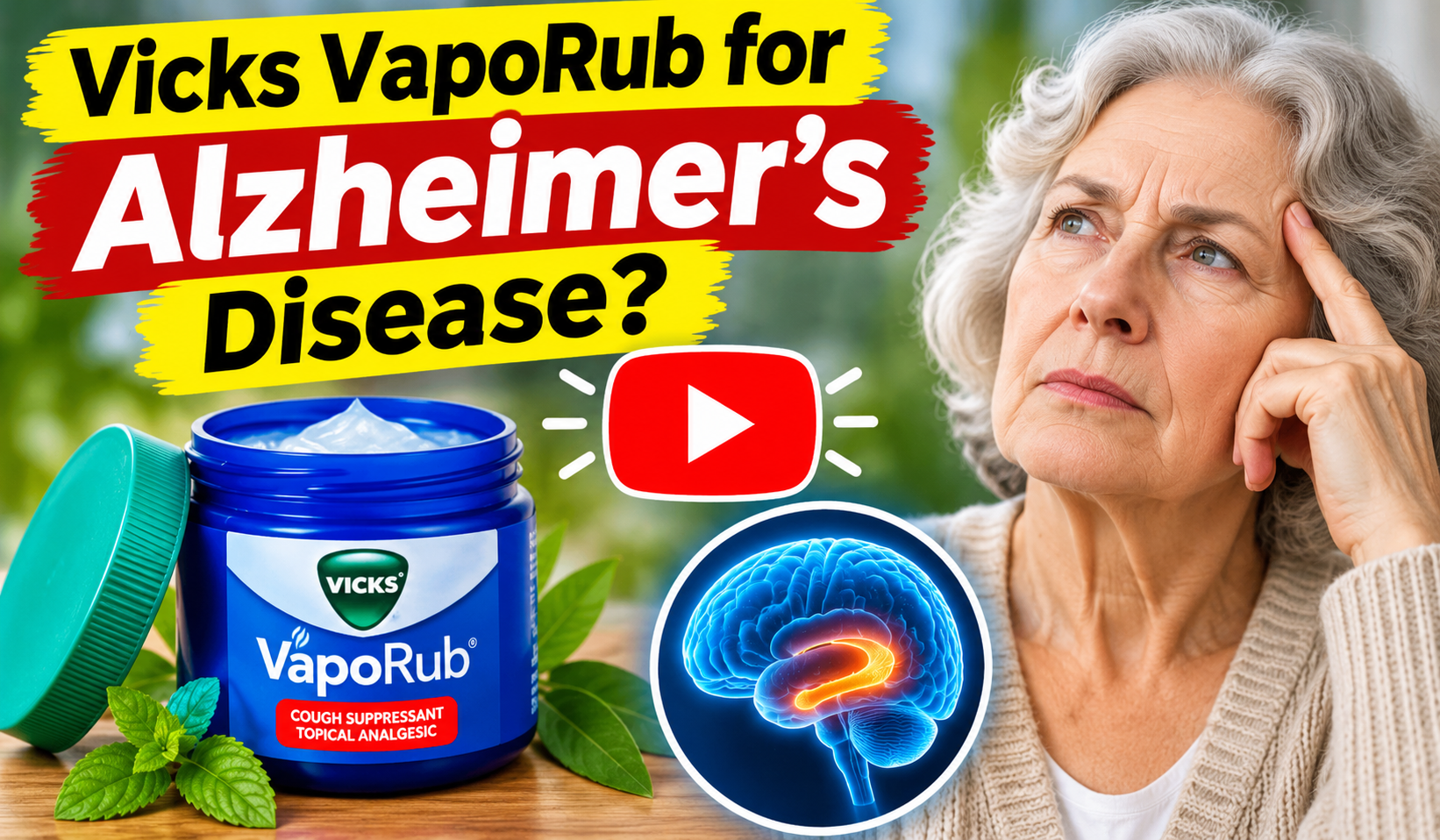

Memory loss, confusion, difficulty recognizing familiar faces, and changes in everyday behavior can make Alzheimer’s disease challenging for both patients and their families. As interest in natural approaches to brain health grows, an unexpected household product has attracted attention: Vicks VapoRub.
Vicks VapoRub for Alzheimer’s disease has become a topic of curiosity because of its menthol, eucalyptus oil, and camphor ingredients. Researchers have explored how certain aromatic substances interact with the brain, particularly through smell-related pathways, inflammation, and memory function.
One notable study found that menthol inhalation influenced immune activity and improved cognitive performance in mice, raising interesting questions about its potential neurological effects. These findings are preliminary and do not establish Vicks VapoRub as an Alzheimer’s treatment.
So, can Vicks VapoRub improve memory, support cognitive function, or help people living with Alzheimer’s disease? This article examines the research, explains the role of its ingredients, discusses potential safety concerns, and explores established approaches to supporting brain health.
What Is Vicks VapoRub?
Vicks VapoRub is a widely recognized over-the-counter topical ointment commonly used to temporarily relieve coughing associated with colds. Its distinctive aroma comes from menthol, camphor, and eucalyptus oil.
Traditionally applied to the chest and throat as directed, Vicks produces a cooling sensation and recognizable vapor that can make breathing feel more comfortable.
More recently, interest has expanded beyond respiratory comfort because scientists have investigated certain aromatic ingredients for their effects on sensory pathways and neurological processes.
Vicks VapoRub is not formulated or approved to treat Alzheimer’s disease, dementia, or memory impairment.
Why Is Vicks VapoRub Being Discussed for Alzheimer’s Disease?
Interest in Vicks VapoRub and Alzheimer’s disease largely comes from research exploring the connection between smell, immune responses, and brain function.
The sense of smell has a close relationship with brain regions involved in emotional responses and memory. Familiar aromas can sometimes trigger vivid recollections of people, places, or past experiences.
Menthol, one of the primary ingredients in Vicks VapoRub, has attracted scientific attention because of its ability to activate sensory receptors and influence biological responses.
In 2023, researchers published a study examining repeated menthol inhalation in mice, including animal models of Alzheimer’s disease.
The study reported improvements in certain cognitive tests, alongside changes in inflammatory signaling. The findings suggested that interactions between smell-related stimulation and immune activity may be worth investigating further.
Importantly, the researchers studied menthol exposure in mice, not Vicks VapoRub treatment in human Alzheimer’s patients.
What Does Scientific Research Say About Vicks VapoRub for Alzheimer’s?
One of the most frequently discussed scientific findings comes from a 2023 study conducted by researchers in Spain.
The 2023 Menthol and Memory Study
The study, titled Improvement of cognitive function in wild-type and Alzheimer’s disease mouse models by the immunomodulatory properties of menthol inhalation or by depletion of T regulatory cells, investigated the relationship between menthol exposure, immune regulation, and cognitive performance.
Researchers evaluated menthol exposure in healthy mice and genetically modified mice that develop features resembling Alzheimer’s disease.
Among the observations:
- Repeated menthol exposure was associated with improved performance in certain memory tests.
- Researchers observed changes in immune signaling related to brain function.
- The inflammatory messenger interleukin-1 beta (IL-1β) was reduced in some measurements.
- In one Alzheimer’s mouse model, intermittent menthol exposure over six months helped prevent the cognitive impairment observed in untreated animals.
These findings are scientifically interesting because they highlight a possible relationship between sensory stimulation, immune regulation, and memory.
Nevertheless, animal results cannot establish whether menthol works in humans. The study did not test household Vicks VapoRub as a treatment, and it did not demonstrate reversal of Alzheimer’s disease in people.
What About Human Clinical Studies?
There is currently no convincing clinical evidence that applying or inhaling Vicks VapoRub improves memory, slows Alzheimer’s progression, or restores cognitive abilities in people with dementia.
The gap between laboratory findings and human treatment outcomes is important. A substance may produce measurable effects in animal experiments without providing a meaningful or safe treatment for patients.
Future clinical research may help scientists understand whether particular smell-related pathways have therapeutic potential.
For now, Vicks VapoRub should not be considered a substitute for medical assessment, prescribed medication, or established dementia care.
Vicks VapoRub Ingredients and Their Potential Effects on Brain Health
Vicks VapoRub contains several aromatic ingredients responsible for its familiar scent and cooling sensation.
Understanding their properties can help explain why the product has attracted interest in discussions about memory and neurological health.
1. Menthol
Menthol is a naturally occurring substance found in peppermint and other mint plants, although commercial formulations may use manufactured menthol.
It activates cooling-sensitive receptors, producing a refreshing sensation when applied to the skin or inhaled.
Menthol has received attention in neurological research because animal experiments have linked certain exposure patterns with changes in immune signaling and cognitive performance.
Its potential role in memory-related research remains investigational. The amount delivered through ordinary Vicks VapoRub use has not been shown to produce the cognitive outcomes observed in animal studies.
2. Eucalyptus Oil
Eucalyptus oil is valued for its strong, fresh aroma and its use in respiratory comfort products.
One of its characteristic constituents is 1,8-cineole, also called eucalyptol, which has been investigated for various biological activities.
Researchers have explored eucalyptus-derived substances in laboratory studies involving inflammation, oxidative stress, and nervous-system biology.
These areas of investigation do not establish that eucalyptus oil can prevent Alzheimer’s disease or improve cognitive performance in affected individuals.
3. Camphor
Camphor is an aromatic substance that produces noticeable sensations when used in topical preparations.
In Vicks VapoRub, it contributes to the product’s characteristic vapor and cough-relief properties.
Camphor can also affect the nervous system when absorbed in excessive amounts. Rather than making it a proven memory aid, this makes correct use especially important.
Camphor-containing ointments should never be swallowed or applied in ways that contradict their labeling.
Can Vicks VapoRub Improve Memory and Cognitive Function?
The possibility that menthol could influence memory has generated considerable interest, particularly among people looking for affordable, accessible ways to support cognitive wellness.
Human memory depends on several interconnected brain systems responsible for learning, attention, emotional processing, and retrieving stored information.
Because smell is closely connected with some of these systems, researchers are studying whether specific forms of sensory stimulation could influence brain activity.
There are three important distinctions to understand.
Sensory stimulation: A familiar scent may activate memories or emotional associations. This does not necessarily improve memory capacity.
Temporary alertness: Strong aromas can produce noticeable sensory experiences, but feeling more alert is not the same as reversing cognitive decline.
Disease treatment: Slowing Alzheimer’s progression requires evidence of meaningful changes in clinical outcomes. No such benefit has been demonstrated for Vicks VapoRub.
These distinctions help explain why promising laboratory research should not be interpreted as proof of a home remedy.
Can Aromatherapy Help People With Alzheimer’s Disease?
Aromatherapy involves using pleasant or familiar scents to create a sensory experience. Families and caregivers sometimes explore aromatherapy to support relaxation, comfort, and meaningful engagement.
For someone living with dementia, a familiar scent may remind them of a garden, a favorite meal, or another personal experience.
Such experiences can sometimes encourage conversation or emotional connection, particularly when paired with photographs, music, and familiar routines.
A 2020 review examined 13 studies involving 708 participants with dementia. The researchers found no convincing overall evidence that aromatherapy improves dementia symptoms, with inconsistent findings and weaknesses in the studies.
This means aromatherapy may be explored as a comfort-oriented activity when appropriate, but it should not be viewed as a treatment for memory loss or Alzheimer’s disease.
Is Vicks VapoRub Safe for People With Alzheimer’s Disease?
Vicks VapoRub can be used for its labeled purposes when the directions and precautions are followed. For people living with Alzheimer’s disease, additional attention may be necessary because memory problems can interfere with recognizing discomfort, following instructions, or remembering whether a product has already been applied.
Potential concerns include:
- Skin irritation: Menthol, camphor, and fragrant oils may cause redness, burning, or sensitivity.
- Accidental swallowing: Camphor-containing products can cause serious poisoning if ingested.
- Improper application: Vicks should not be placed inside the nostrils, near the eyes, or on damaged skin.
- Strong scent sensitivity: Some individuals may find the aroma unpleasant or irritating.
- Repeated unsupervised application: Someone with cognitive impairment may accidentally use more than directed.
The product label also warns against heating Vicks VapoRub, microwaving it, or adding it to hot water because of burn risks.
If a person with Alzheimer’s disease needs Vicks for ordinary cough relief, a caregiver should help ensure that it is used correctly and only when appropriate.
Do not apply it under the nose, on the temples, or to the scalp as an experimental memory treatment. There is no established therapeutic method or dosage for Alzheimer’s disease.
What Treatments Actually Help With Alzheimer’s Disease?
Although no current treatment cures Alzheimer’s disease, medical care can help manage symptoms and, for selected patients, slow aspects of disease progression.
Treatment decisions depend on the stage of Alzheimer’s, medical history, other conditions, and individual preferences.
Medications for Memory and Thinking
Certain prescription medicines, including donepezil, rivastigmine, galantamine, and memantine, may help manage cognitive symptoms in eligible patients.
These medicines do not reverse the underlying disease but may provide symptomatic benefits for some individuals.
Treatments That Target Alzheimer’s Biology
Anti-amyloid therapies, including lecanemab and donanemab, are available for selected people with early Alzheimer’s disease and confirmed amyloid pathology.
Clinical trials have shown that these medicines can slow cognitive and functional decline on average in certain patients. They also carry important risks, including brain swelling and bleeding, and require specialist assessment and monitoring.
They are not suitable for everyone.
Personalized Dementia Care
Medical treatment is only one part of Alzheimer’s management. Structured daily routines, occupational therapy, nutritional support, fall prevention, caregiver education, and meaningful social activities can help maintain comfort, independence, and quality of life.
The goal is to support the person as a whole, rather than focus exclusively on memory test results.
Natural Ways to Support Brain Health and Cognitive Wellness
While Vicks VapoRub has not been established as a memory treatment, several lifestyle practices have stronger research foundations for supporting brain health.
1. Stay Physically Active
Regular movement supports cardiovascular health, circulation, balance, and general physical functioning.
Walking, swimming, gentle strength training, and supervised exercises can be useful options depending on a person’s abilities.
Physical activity is also associated with a lower risk of developing dementia.
2. Follow a Balanced Eating Pattern
A diet emphasizing vegetables, fruits, whole grains, legumes, nuts, fish, and healthy unsaturated fats can contribute to cardiovascular and metabolic wellness.
Mediterranean-style eating patterns are frequently discussed in brain-health research.
Good nutrition is especially important for people with dementia who may struggle to prepare meals, maintain hydration, or recognize hunger.
3. Manage Blood Pressure and Diabetes
High blood pressure, diabetes, and certain cardiovascular conditions are associated with greater risks of cognitive decline.
Routine checkups, medication adherence, physical activity, and appropriate nutrition can help manage these conditions.
4. Maintain Social Connections
Regular interaction with family, friends, and community members can encourage communication, emotional connection, and meaningful participation in daily life.
For individuals with Alzheimer’s disease, familiar activities and predictable social routines may be especially comforting.
5. Prioritize Sleep and Sensory Health
Sleep difficulties, untreated hearing loss, and poor vision may worsen everyday functioning and make communication more challenging.
Addressing sleep problems and using appropriate hearing or vision support can help individuals remain engaged in their surroundings.
Dementia risk-reduction guidance emphasizes modifiable factors such as physical inactivity, smoking, excessive alcohol consumption, and chronic health conditions.
When Should Someone Seek Medical Advice for Memory Problems?
Occasionally forgetting a name or misplacing an object does not automatically mean a person has Alzheimer’s disease.
More concerning changes include repeatedly forgetting recent conversations, becoming lost in familiar locations, struggling with routine tasks, and experiencing persistent changes in judgment or behavior.
Medical evaluation matters because memory problems may also result from medication effects, sleep disturbances, depression, thyroid disorders, vitamin deficiencies, or other treatable conditions.
A healthcare professional may recommend cognitive assessments, laboratory tests, neurological examinations, or brain imaging.
Early evaluation can provide greater opportunities to identify the cause, discuss treatment options, and plan appropriate support.
Sudden confusion or an abrupt change in mental status requires urgent medical assessment, particularly when accompanied by weakness, speech difficulties, fever, or other new symptoms.
Final Verdict
The interest surrounding Vicks VapoRub for Alzheimer’s disease highlights an intriguing area of scientific research: the relationship between smell, immune activity, and memory.
The 2023 menthol study provides a reason to investigate these biological pathways further, particularly because researchers observed changes in cognitive performance in animal models.
Yet the findings do not demonstrate that applying or smelling Vicks VapoRub improves memory, prevents dementia, or reverses Alzheimer’s disease in humans.
Vicks VapoRub remains a useful household product for its labeled respiratory and topical pain-relief purposes, but it is not an established Alzheimer’s treatment. Families seeking cognitive support should prioritize professional diagnosis, appropriate medical treatment, safe daily routines, and supportive lifestyle practices.
Continued neurological research may uncover valuable discoveries involving sensory stimulation and brain health. Until clinical studies establish clear benefits and safety, Vicks VapoRub should remain a household remedy for its intended uses—not a substitute for Alzheimer’s care.
