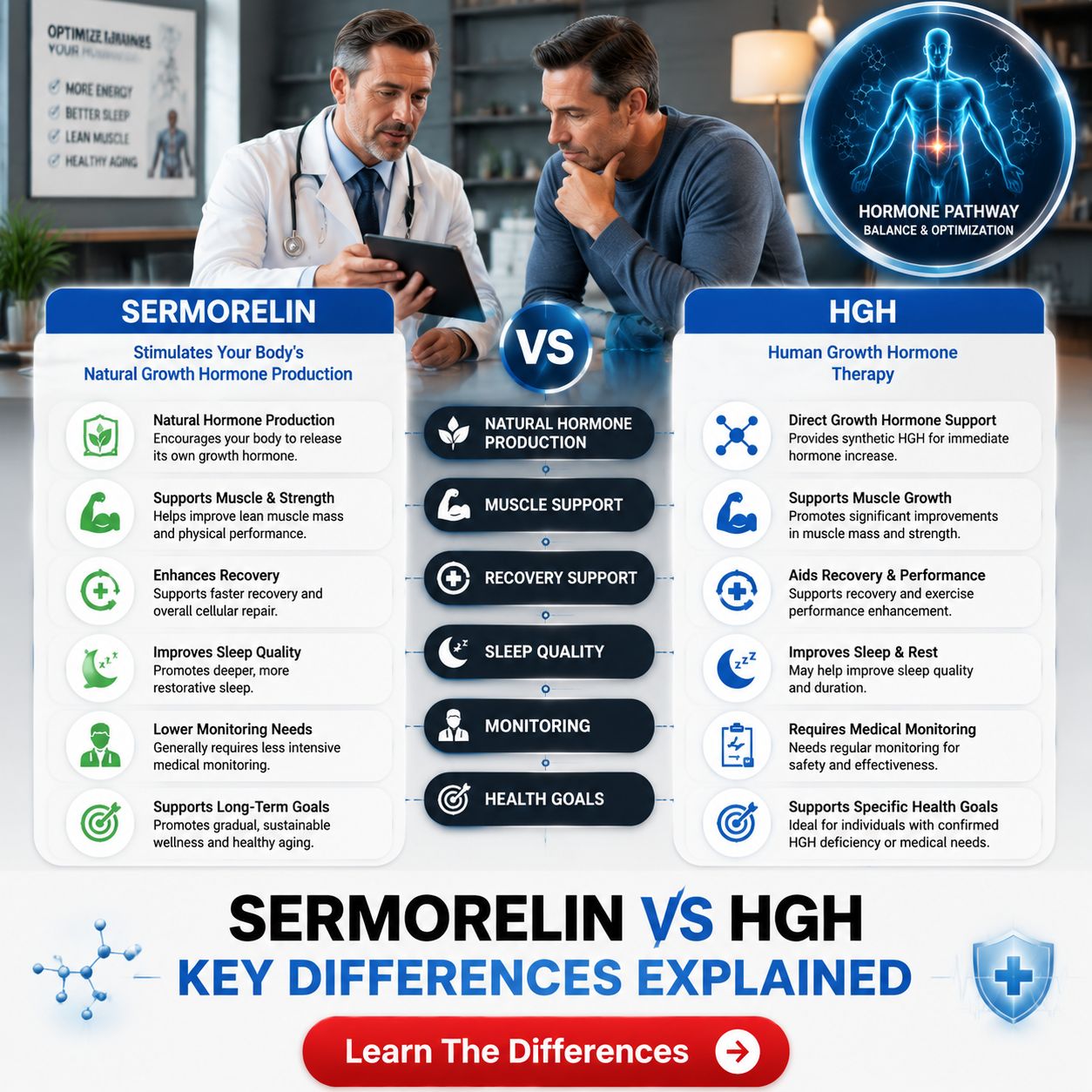
Sermorelin vs HGH – (💪 Key Differences & Benefits!). Compare how Sermorelin and HGH work, their benefits, uses, safety, and which may suit your needs.
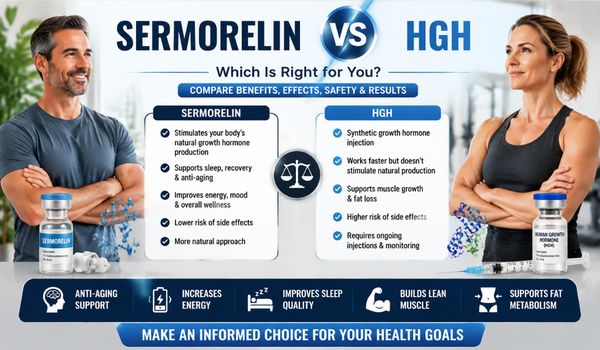

As we age, our bodies naturally produce less human growth hormone (HGH).
This gradual decline often begins around age 30 and may contribute to reduced energy, slower muscle recovery, increased body fat, poor sleep quality, and decreased physical performance.
Because of these changes, many people explore therapies that can help support healthy hormone levels.
Two of the most commonly discussed options are Sermorelin and Human Growth Hormone (HGH) therapy. While both are associated with growth hormone, they work in very different ways.
HGH therapy replaces the hormone directly, whereas Sermorelin encourages your body to produce its own growth hormone naturally.
Understanding these differences is important before deciding which option may be appropriate for your health goals. Factors such as effectiveness, safety, side effects, cost, and medical eligibility all play a role in choosing the right treatment.
In this guide, we’ll compare Sermorelin vs HGH, explain how each treatment works, discuss their benefits and potential risks, and help you understand which option may better suit your needs.
What Is Sermorelin?
Sermorelin is a synthetic version of Growth Hormone-Releasing Hormone (GHRH), a naturally occurring hormone produced by the hypothalamus. Its primary purpose is to stimulate the pituitary gland to release more of your body’s own human growth hormone.
Unlike HGH injections, Sermorelin does not supply growth hormone directly. Instead, it works with your body’s natural hormone production process, encouraging the pituitary gland to release HGH in normal physiological pulses.
Because it supports natural hormone production rather than replacing it, many healthcare providers consider Sermorelin a more physiological approach for eligible adults with declining growth hormone levels.
Potential benefits of Sermorelin may include:
- Increased energy levels
- Better sleep quality
- Improved exercise recovery
- Support for lean muscle mass
- Healthy metabolism
- Improved body composition
- Enhanced overall wellness
- Support for healthy aging
Most Sermorelin treatment plans require a prescription and medical supervision. It is commonly administered as a daily subcutaneous injection, although some telehealth providers also offer dissolvable tablet formulations.
What Is Human Growth Hormone (HGH)?
Human Growth Hormone, commonly known as HGH or somatropin, is a laboratory-produced version of the natural growth hormone made by the pituitary gland.
Unlike Sermorelin, HGH therapy delivers growth hormone directly into the body through injections. This immediately increases circulating growth hormone levels without relying on the pituitary gland to produce more.
HGH is an FDA-approved prescription medication for specific medical conditions, including:
- Adult growth hormone deficiency
- Childhood growth disorders
- Turner syndrome
- Chronic kidney disease affecting growth
- Prader-Willi syndrome
- Short bowel syndrome
- HIV-associated wasting
Because HGH directly replaces the hormone, it generally produces stronger and faster increases in circulating growth hormone levels than Sermorelin.
However, direct hormone replacement also requires careful medical supervision due to the increased possibility of side effects when used inappropriately.
HGH should only be used under the guidance of a qualified healthcare provider and is not intended for anti-aging, bodybuilding, or athletic performance enhancement without a legitimate medical indication.
Sermorelin vs HGH: Quick Comparison
| Feature | Sermorelin | HGH Therapy |
|---|---|---|
| Treatment Type | Growth hormone-releasing peptide | Synthetic human growth hormone |
| How It Works | Stimulates natural HGH production | Directly replaces HGH |
| Hormone Source | Your own pituitary gland | External hormone injection |
| Administration | Usually daily injection | Daily or prescribed injection |
| Prescription Required | Yes | Yes |
| Medical Supervision | Required | Required |
| Natural Hormone Rhythm | Yes | No |
| FDA Approval | Compounded depending on formulation | FDA-approved for specific conditions |
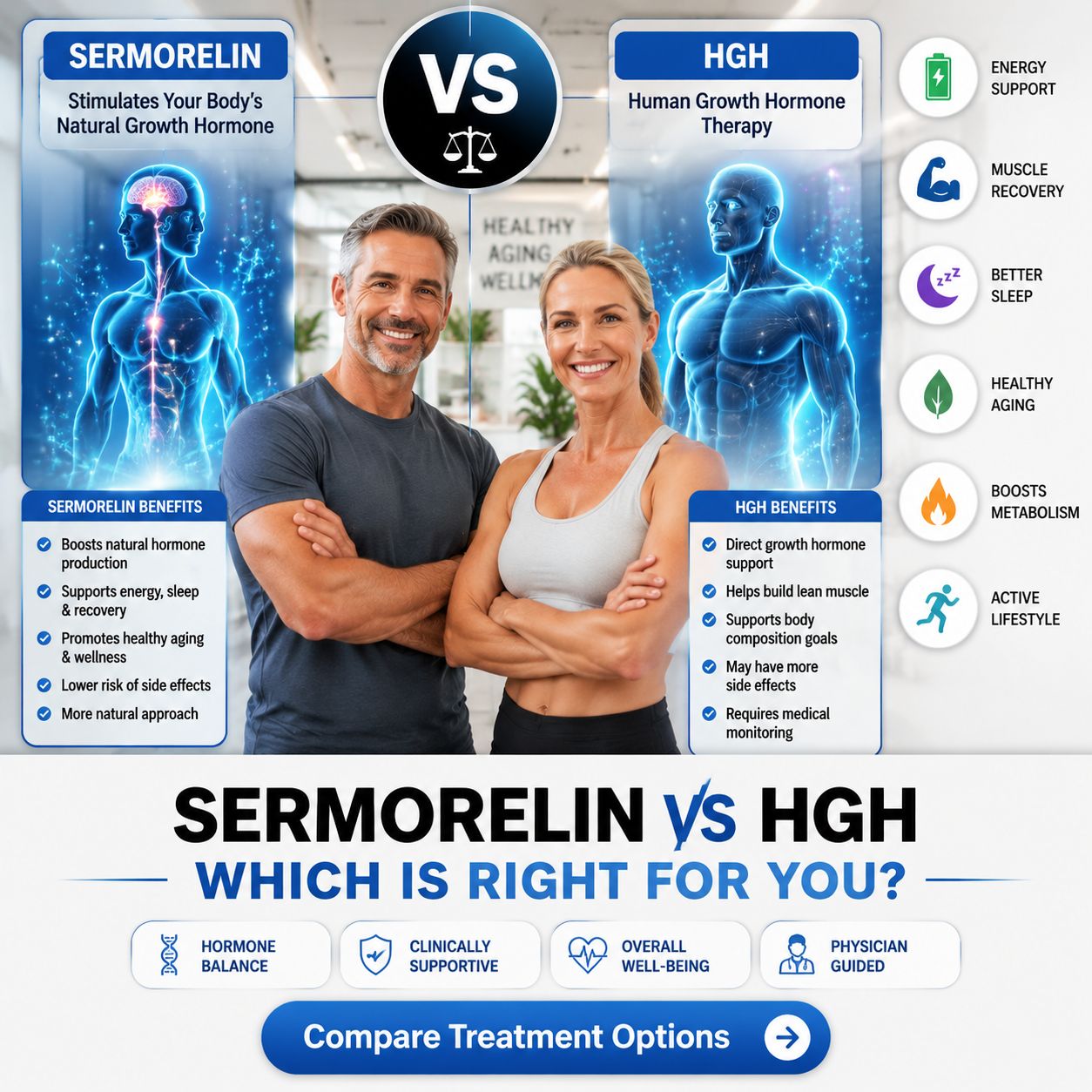
How Does Sermorelin Work?
Sermorelin works by activating receptors in the pituitary gland. Once stimulated, the pituitary responds by releasing its own growth hormone in natural pulses.
This process closely resembles how healthy hormone production occurs in younger individuals.
After HGH is released, it stimulates the liver to produce Insulin-like Growth Factor-1 (IGF-1). IGF-1 plays an important role in:
- Muscle growth
- Bone health
- Tissue repair
- Protein synthesis
- Fat metabolism
- Exercise recovery
Because Sermorelin relies on your body’s natural feedback system, hormone production generally remains within physiological limits, reducing the likelihood of excessive hormone exposure.
How Does HGH Therapy Work?
HGH therapy bypasses the body’s normal hormone regulation process by delivering synthetic human growth hormone directly into the bloodstream.
After injection, HGH begins circulating immediately and interacts with tissues throughout the body. Like naturally produced HGH, it also stimulates the liver to produce IGF-1, which contributes to growth, muscle development, and metabolic regulation.
Since HGH is supplied externally, the pituitary gland is not responsible for producing additional hormone. This direct replacement approach is highly effective for people with confirmed growth hormone deficiency but requires careful dosing and ongoing monitoring by healthcare professionals.
Why People Compare Sermorelin and HGH?
Although both therapies are associated with growth hormone, their goals and mechanisms are different.
Many adults interested in improving energy, recovery, or overall wellness prefer Sermorelin because it encourages natural hormone production rather than replacing the hormone directly.
On the other hand, individuals diagnosed with true growth hormone deficiency often require HGH replacement therapy because their bodies cannot produce enough growth hormone on their own.
Understanding the distinction between hormone stimulation and hormone replacement is one of the most important aspects of choosing between these two treatments.
Sermorelin vs HGH: Key Differences, Benefits, Side Effects, and Cost (Part 2)
Sermorelin vs HGH: Key Differences
Although Sermorelin and HGH both influence growth hormone activity, they work in fundamentally different ways. Understanding these distinctions can help you have a more informed discussion with your healthcare provider.
1. How They Work
The biggest difference is their mechanism of action.
Sermorelin stimulates the pituitary gland to produce your body’s own human growth hormone. Since your body controls how much hormone is released, production generally follows its natural rhythm.
HGH therapy bypasses the pituitary gland altogether. It introduces synthetic human growth hormone directly into the bloodstream, immediately increasing hormone levels regardless of your body’s natural feedback mechanisms.
2. Natural Hormone Production
Sermorelin encourages natural hormone production.
Because the pituitary gland remains responsible for releasing HGH, the body can continue using its normal regulatory system.
HGH therapy replaces the hormone externally rather than encouraging the body to produce it.
3. Medical Uses
Sermorelin is commonly prescribed through healthcare providers for adults who may benefit from stimulating natural HGH production under clinical supervision.
HGH is FDA approved for specific medical conditions such as adult growth hormone deficiency, pediatric growth disorders, Turner syndrome, chronic kidney disease affecting growth, HIV-associated wasting syndrome, and several other recognized medical conditions.
4. Administration
Both treatments are commonly administered through subcutaneous injections.
Some providers also offer Sermorelin in dissolvable tablet formulations, while HGH is generally available as injectable medication.
5. Monitoring Requirements
Both therapies require ongoing medical supervision.
Healthcare providers may monitor treatment response, hormone levels, symptoms, and overall health throughout therapy.
Benefits of Sermorelin
Many adults choose Sermorelin because it supports the body’s own hormone production.
Potential benefits may include:
Supports Natural HGH Production
Instead of replacing growth hormone, Sermorelin encourages the pituitary gland to release HGH naturally.
May Improve Energy
Some patients report feeling more energetic and active after consistent treatment under medical supervision.
Supports Lean Muscle Mass
Growth hormone plays an important role in maintaining muscle tissue. Sermorelin may help support lean body composition when combined with proper nutrition and exercise.
Better Exercise Recovery
Growth hormone contributes to tissue repair and muscle recovery after physical activity.
Improved Sleep Quality
Growth hormone release naturally occurs during deep sleep. Some individuals report better sleep quality while undergoing treatment.
Supports Healthy Aging
Declining HGH levels are a normal part of aging. Sermorelin may help support overall wellness in eligible adults experiencing age-related hormonal decline.
Benefits of HGH Therapy
For individuals diagnosed with true growth hormone deficiency, HGH replacement therapy offers significant medical benefits.
Potential benefits include:
- Replacement of deficient growth hormone
- Improved body composition
- Increased lean muscle mass
- Reduced body fat in appropriate patients
- Better bone density
- Improved physical performance in growth hormone-deficient adults
- Enhanced quality of life in medically eligible patients
These benefits are most consistently observed in individuals with confirmed growth hormone deficiency receiving treatment under medical supervision.
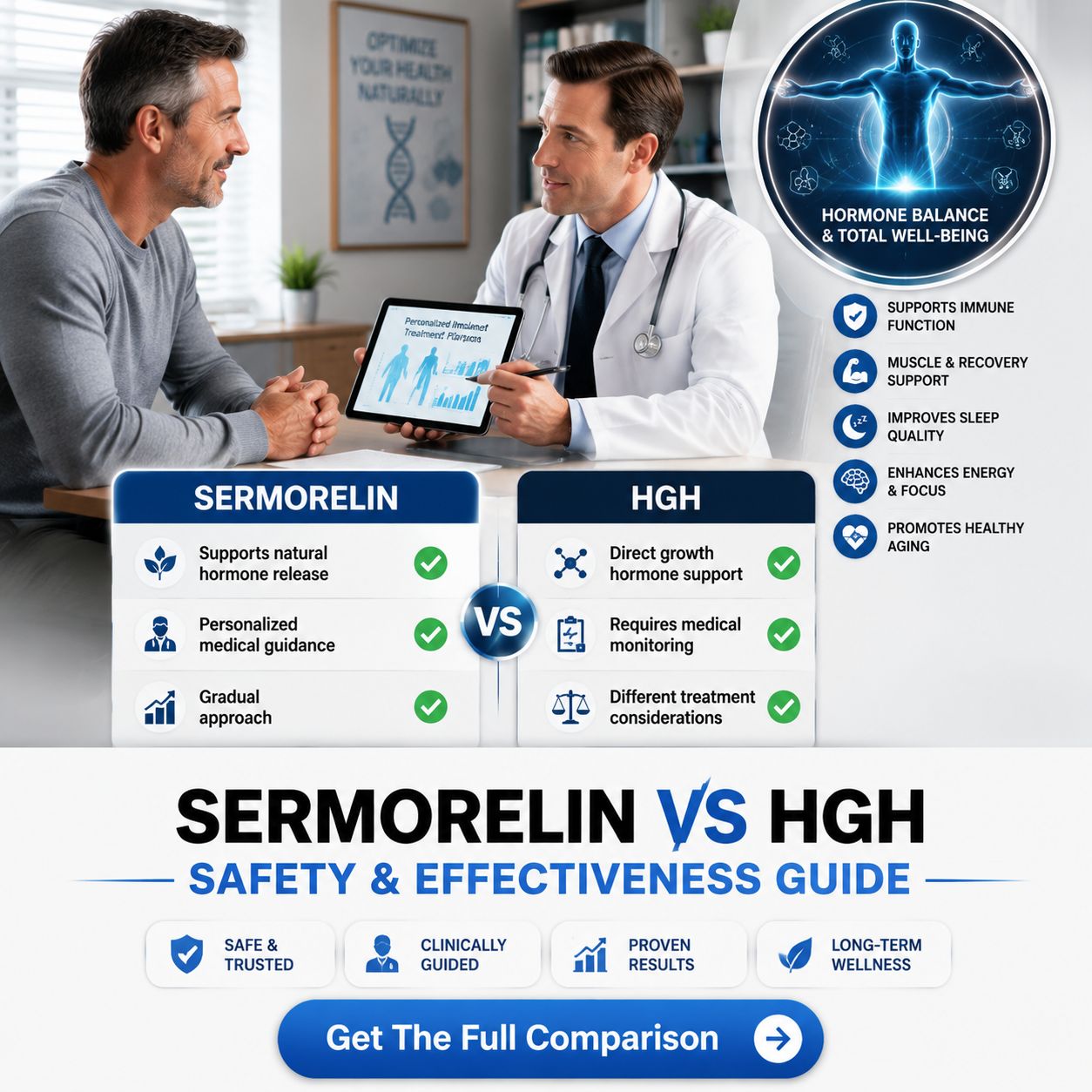
Sermorelin vs HGH: Side Effects
Every prescription medication carries potential risks. Side effects vary from person to person and should always be discussed with your healthcare provider.
Possible Sermorelin Side Effects
Reported side effects may include:
- Injection site redness
- Mild swelling
- Headache
- Dizziness
- Flushing
- Temporary nausea
Many people tolerate Sermorelin well, although individual experiences differ.
Possible HGH Side Effects
Potential side effects may include:
- Joint pain
- Muscle pain
- Fluid retention
- Swelling in hands or feet
- Headache
- Carpal tunnel symptoms
- Elevated blood sugar in some individuals
Because HGH directly replaces growth hormone, careful dosing and monitoring are especially important.
Which Treatment Works Faster?
HGH generally produces a faster increase in circulating growth hormone because it delivers the hormone directly.
Sermorelin works more gradually since it relies on the body’s own pituitary gland to produce growth hormone naturally.
The speed of results varies depending on factors such as:
- Age
- Overall health
- Hormone levels
- Medical condition
- Lifestyle habits
- Exercise routine
- Nutrition
- Treatment adherence
Regardless of the therapy chosen, meaningful improvements often take several weeks or months rather than days.
Safety Comparison
Both treatments should only be used under the supervision of licensed healthcare providers.
Sermorelin
Because it stimulates natural hormone production, Sermorelin follows the body’s own regulatory pathways. Many clinicians consider this a more physiologic approach for eligible patients.
HGH
HGH has decades of clinical research supporting its use for approved medical conditions. However, because it directly replaces growth hormone, careful monitoring is essential to reduce the risk of excessive hormone exposure or unwanted side effects.
Neither treatment should be started without appropriate medical evaluation.
Cost Comparison
The cost of treatment varies depending on several factors.
These include:
- Provider
- Dosage
- Treatment duration
- Pharmacy
- Insurance coverage
- Geographic location
In general:
| Feature | Sermorelin | HGH |
|---|---|---|
| Typical Monthly Cost | Often lower | Often higher |
| Insurance Coverage | Usually limited | May be available for approved conditions |
| Prescription Required | Yes | Yes |
| Provider Monitoring | Required | Required |
Because HGH is FDA approved for certain medical conditions, insurance may cover treatment for eligible patients. Sermorelin is frequently obtained through telehealth or specialty clinics and is commonly paid for out of pocket.
Can You Take Sermorelin and HGH Together?
Some healthcare providers may consider combining therapies in select clinical situations, but this decision depends entirely on the individual’s medical history, diagnosis, treatment goals, and hormone levels.
You should never combine Sermorelin and HGH without guidance from a qualified healthcare provider, as doing so may increase the risk of adverse effects or interfere with appropriate hormone management.
Next: Part 3 will include:
- Who should choose Sermorelin?
- Who may benefit from HGH?
- Frequently Asked Questions
- Final Verdict