⚡Horse Gelatin vs Beef Gelatin🧪: Which One Is Better for Health, Nutrition, and Collagen Support?

Introduction
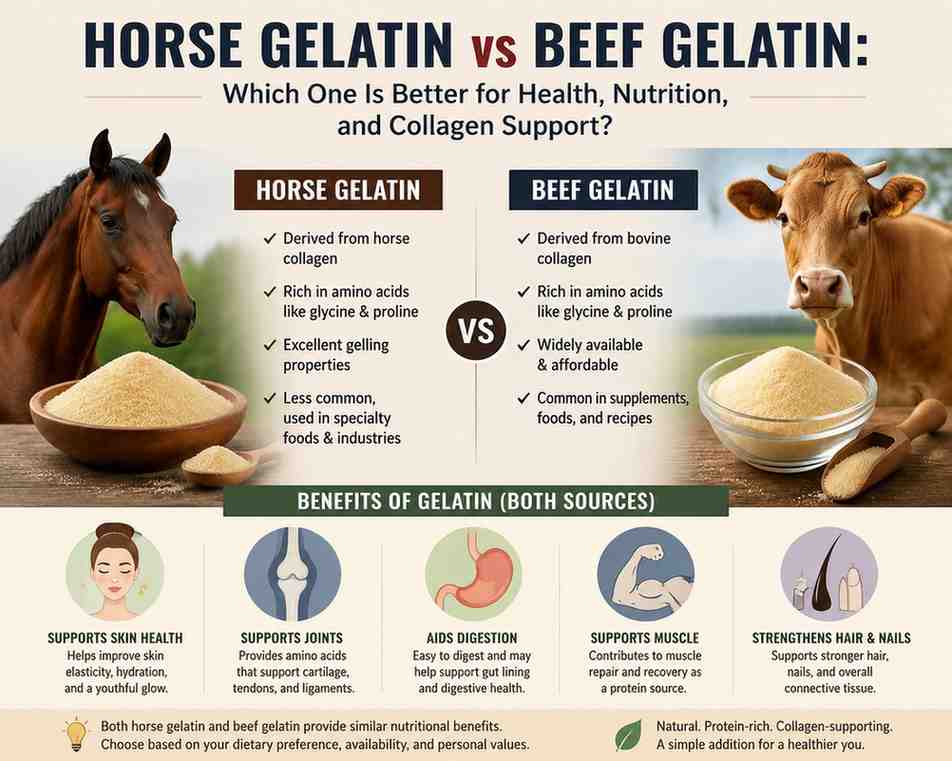
Gelatin has become increasingly popular among people looking for natural sources of protein, collagen support, and ingredients that may help promote healthy skin, joints, digestion, and overall wellness.
While most people are familiar with traditional gelatin made from beef, another type, known as horse gelatin, has also gained attention in certain regions and industries.
Both horse gelatin and beef gelatin are animal-derived proteins produced of breaking down collagen-rich connective tissue.
They contain amino acids that play important roles in maintaining the structure of the body, including skin elasticity, cartilage, bones, and connective tissues.
However, the two types of gelatin differ in their source, production methods, nutritional profiles, availability, cultural acceptance, and common uses.
Choosing between horse gelatin and beef gelatin depends on several factors, including dietary preferences, health goals, ingredient sourcing, allergies, ethical considerations, and personal values.
While beef gelatin is widely available and commonly used in supplements and food products, horse gelatin has historically been used in specific culinary traditions, pharmaceutical applications, and specialized industries.
Understanding the differences between horse gelatin and beef gelatin can help consumers make a more informed choice when selecting gelatin-based products for cooking, supplementation, or wellness purposes.
What Is Gelatin?
Gelatin is a natural protein derived from collagen, one of the most abundant proteins in animals. Collagen provides structural support to tissues such as skin, bones, tendons, ligaments, and cartilage.
During gelatin production, collagen-rich animal parts such as skin, bones, and connective tissues undergo hydrolysis. This process breaks down collagen into smaller protein chains known as gelatin peptides.
Gelatin is valued because it contains several important amino acids, including:
- Glycine
- Proline
- Hydroxyproline
- Alanine
- Glutamic acid
These amino acids contribute to the formation and maintenance of connective tissues throughout the body.
Gelatin is commonly used in:
- Food preparation
- Desserts
- Capsules and supplements
- Functional foods
- Protein products
- Pharmaceutical applications
When mixed with water, gelatin forms a gel-like texture, making it useful as a thickening and stabilizing ingredient.
Although gelatin comes from different animal sources, its basic structure remains similar because it is derived from collagen.
What Is Horse Gelatin?
Horse gelatin is a type of gelatin produced from collagen-rich tissues obtained from horses. The production process involves extracting collagen from parts such as skin, bones, and connective tissues and converting it into gelatin.
Historically, horse gelatin has been used in certain European and Asian food traditions, as well as in specialized industries.
It has also been explored for pharmaceutical and technical applications because of its unique gelling properties.
Horse gelatin contains many of the same amino acids found in other animal-based gelatins, including glycine and proline, which are important components of collagen structures.
However, horse gelatin is less commonly available compared with beef or pork gelatin. This limited availability is mainly due to cultural preferences, regulations surrounding horse-derived products, and lower consumer demand in many countries.
Some people choose horse gelatin because they prefer alternative animal sources or because of specific regional traditions. Others may select it based on perceived differences in texture, quality, or sourcing.
What Is Beef Gelatin?
Beef gelatin is gelatin produced from cattle-derived collagen sources, including bovine hides, bones, and connective tissues.
It is one of the most widely used forms of gelatin worldwide and is commonly found in:
- Collagen supplements
- Protein powders
- Gummies
- Capsules
- Cooking ingredients
- Functional foods
Beef gelatin is popular because cattle are widely used in food production, making the ingredient easier to source and manufacture at large scale.
Like other forms of gelatin, beef gelatin provides amino acids that support the body’s natural collagen production process. It is often chosen by people looking for a convenient protein source that fits into their wellness routine.
Many collagen and gelatin supplemen ts use bovine sources because they offer consistent quality, availability, and compatibility with many dietary programs.
Horse Gelatin vs Beef Gelatin: Main Differences
Although both horse gelatin and beef gelatin come from collagen, they have several important differences.
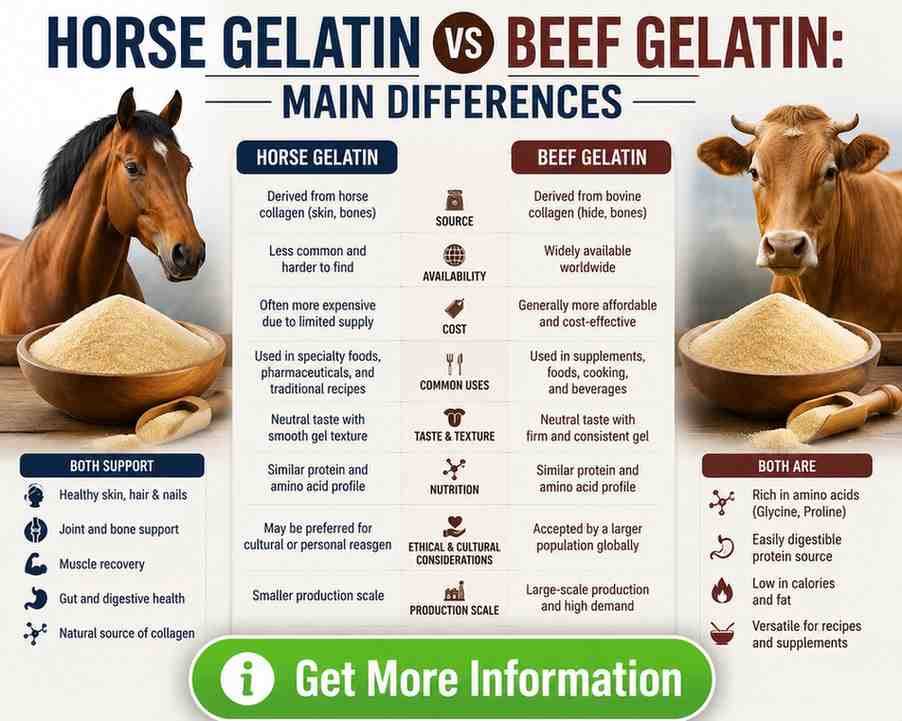
| Feature | ➥ Horse Gelatin | ➥ Beef Gelatin |
| Source | Horse collagen tissues | Cattle collagen tissues |
| Availability | Less common | Widely available |
| Popular Uses | Regional foods, specialty applications | Supplements, foods, cooking |
| Protein Content | Similar to other gelatins | Similar to other gelatins |
| Amino Acids | Rich in glycine and proline | Rich in glycine and proline |
| Consumer Demand | Limited | High |
| Manufacturing Scale | Smaller production | Large-scale production |
| Cultural Acceptance | Depends on region | More widely accepted |
The biggest difference between the two is not necessarily their basic nutritional makeup but rather their source, availability, and consumer acceptance.
Nutritional Comparison: Horse Gelatin vs Beef Gelatin
Both horse gelatin and beef gelatin provide similar nutritional benefits because they are both collagen-derived proteins.
A typical serving of gelatin provides:
- Protein
- Essential amino acids
- Low fat content
- No carbohydrates
Protein Content
Both types of gelatin are concentrated protein sources. They contain amino acids that help form collagen structures in the body.
However, the exact nutritional value may vary depending on:
- Processing methods
- Purity level
- Manufacturing techniques
- Source quality
Generally, beef gelatin is more commonly studied and used in nutritional products because of its widespread availability.
Amino Acid Profile Comparison
The amino acid composition of gelatin is one of its most important characteristics.
Glycine
Glycine is one of the most abundant amino acids in gelatin.
It plays a role in:
- Protein formation
- Connective tissue structure
- Normal body functions
Both horse and beef gelatin contain significant amounts of glycine.
Proline and Hydroxyproline
These amino acids are important components of collagen.
They contribute to:
- Skin structure
- Joint cartilage
- Tendon strength
Because both gelatins come from collagen, their amino acid profiles are generally comparable.
Collagen Support: Which One Is Better?
Many people consume gelatin to support their body’s collagen levels.
Collagen naturally decreases with age, which may contribute to changes in:
- Skin firmness
- Joint comfort
- Muscle recovery
- Connective tissue strength
Both horse gelatin and beef gelatin provide collagen-derived peptides that supply amino acids used by the body.
However, there is no strong evidence proving that horse gelatin provides superior collagen benefits compared with beef gelatin.
The effectiveness of gelatin depends more on:
- Quality of the product
- Amount consumed
- Overall diet
- Lifestyle habits
For most people, a high-quality beef gelatin product may provide collagen-supporting benefits similar to those of horse gelatin.
Benefits of Horse Gelatin
Supports Protein Intake
Horse gelatin provides a concentrated source of protein that may help individuals increase their daily protein consumption.
Protein is essential for:
- Maintaining muscle tissue
- Supporting normal body functions
- Producing important structural proteins
May Support Skin Health
Because gelatin contains collagen-related amino acids, it may support the natural structure of the skin.
Collagen is associated with:
- Skin elasticity
- Hydration
- Structural strength
Regular dietary protein intake, including collagen sources, may support overall skin wellness.
Supports Joint Structure
Gelatin contains amino acids involved in collagen formation, which is an important component of cartilage and connective tissue.
People who include gelatin in their diet often do so to support:
- Joint mobility
- Healthy cartilage
- Normal movement
Useful Culinary Properties
Horse gelatin has unique gelling characteristics that make it useful in certain food applications.
It can be used for:
- Desserts
- Thickening recipes
- Culinary preparations
Benefits of Beef Gelatin
Provides High-Quality Protein
Beef gelatin is a convenient protein source that can help support daily nutritional needs.
It is especially popular among people who want:
- Collagen-based protein
- Low-fat protein options
- Easy-to-use ingredients
Supports Healthy Connective Tissue
The amino acids found in beef gelatin contribute to collagen production pathways.
Connective tissues include:
- Skin
- Ligaments
- Tendons
- Cartilage
Popular Choice for Supplements
Many collagen supplements use beef-derived gelatin because it is:
- Easily available
- Widely accepted
- Consistently manufactured
Easy to Add Into Daily Diet
Beef gelatin can be incorporated into:
- Smoothies
- Drinks
- Recipes
- Protein snacks
Its availability makes it a practical choice for many consumers.
Taste and Texture Comparison: Horse Gelatin vs Beef Gelatin
Although gelatin is generally considered a neutral ingredient, subtle differences can exist depending on the animal source, processing method, and product quality.
Horse Gelatin Taste and Texture
Horse gelatin is known for its unique gelling properties. In certain culinary applications, it may create a slightly different texture compared with other types of gelatin.
Some characteristics include:
- Smooth gel formation
- Good thickening ability
- Stable texture in certain recipes
Because horse gelatin is less common in everyday foods, many consumers have less familiarity with its taste and performance.
The final taste usually depends more on the recipe and added ingredients rather than the gelatin itself.
Beef Gelatin Taste and Texture
Beef gelatin is widely used because of its reliable texture and versatility.
It is commonly used in:
- Homemade gummies
- Desserts
- Protein recipes
- Capsules
- Functional foods
Beef gelatin typically produces a firm yet flexible gel, making it a popular choice among home cooks and manufacturers.
Because of its widespread use, many people are already familiar with products containing beef gelatin.
Digestibility Comparison
Gelatin is generally considered an easily digestible protein source because it has already undergone partial breakdown from collagen into smaller protein structures.
Both horse gelatin and beef gelatin contain amino acids that the body can absorb and use.
However, digestion can vary depending on:
- Individual tolerance
- Overall diet
- Digestive health
- Product quality
There is currently no strong scientific evidence showing that horse gelatin is significantly easier to digest than beef gelatin.
For most individuals, choosing between the two comes down to personal preference rather than major digestive differences.
Horse Gelatin vs Beef Gelatin for Skin Health
Collagen has become one of the most popular ingredients in beauty and wellness products because it plays an important role in maintaining skin structure.
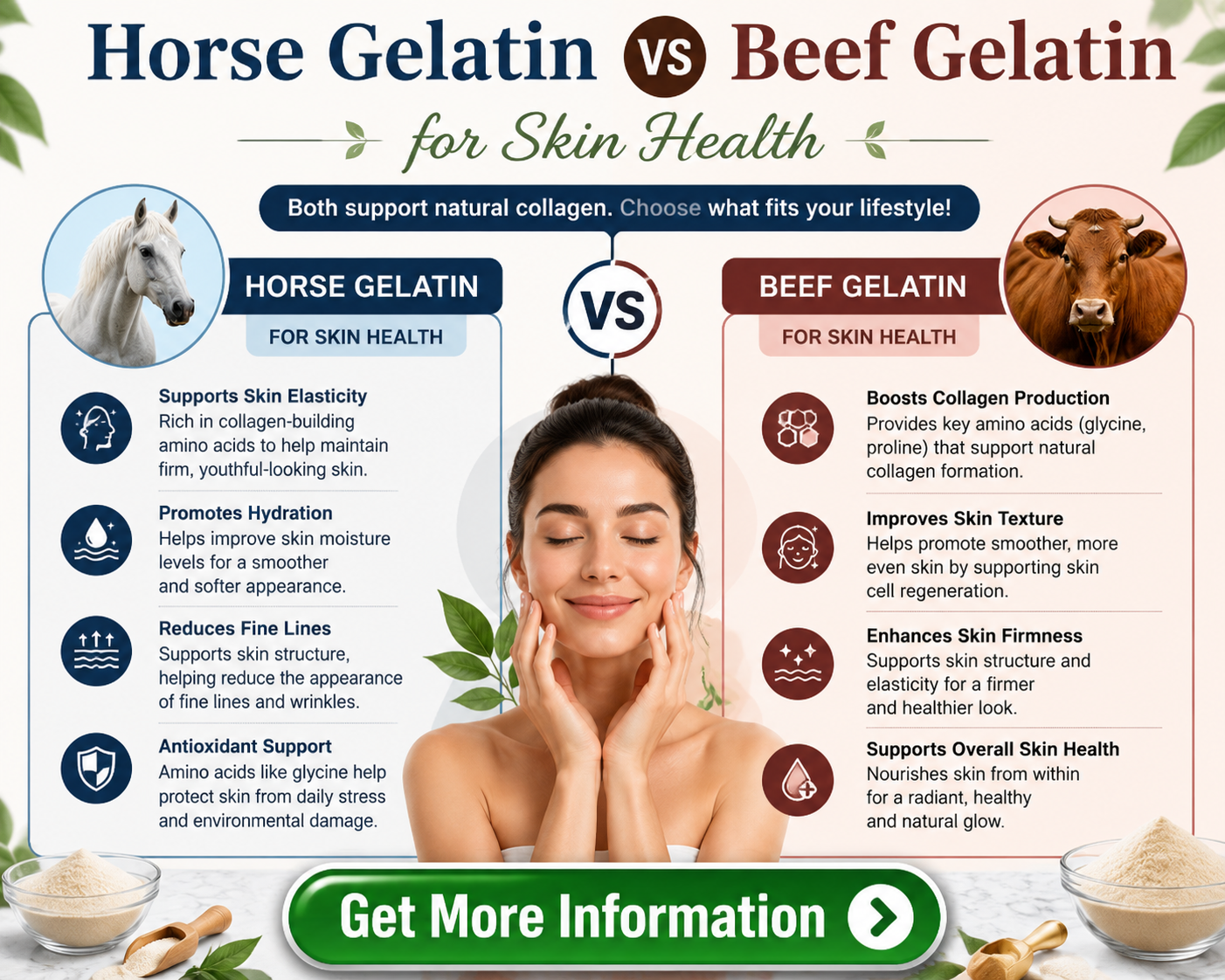
As people age, natural collagen production gradually decreases. This can contribute to visible changes such as:
- Reduced skin elasticity
- Fine lines
- Changes in skin firmness
Both horse gelatin and beef gelatin contain collagen-derived amino acids that support the body’s collagen-building processes.
Beef Gelatin for Skin Support
Beef gelatin is commonly used in collagen supplements because of its availability and consistent quality.
Many consumers choose bovine collagen products because they are:
- Easy to find
- Affordable
- Available in different forms
Horse Gelatin for Skin Support
Horse gelatin also provides collagen-related amino acids. However, it is less commonly used in beauty supplements due to limited availability.
There is no clear evidence that horse gelatin provides better skin benefits than beef gelatin.
The quality, dosage, and consistency of use are likely more important factors.
Horse Gelatin vs Beef Gelatin for Joint Health
Joint health is another common reason people consume gelatin and collagen products.
Cartilage, tendons, and ligaments contain collagen, making collagen-related nutrients an area of interest for individuals supporting healthy movement.
Beef Gelatin and Joint Support
Beef gelatin provides amino acids involved in collagen formation.
It is often included in wellness routines focused on:
- Maintaining joint flexibility
- Supporting connective tissues
- Promoting active lifestyles
Horse Gelatin and Joint Support
Horse gelatin also contains collagen-derived nutrients.
However, research comparing horse gelatin directly with beef gelatin for joint-related benefits is limited.
Both options may provide similar nutritional support because they contain comparable collagen components.
Horse Gelatin vs Beef Gelatin for Muscle Recovery
Protein plays an important role in maintaining and repairing muscle tissue.
While gelatin is not considered a complete protein because it lacks some essential amino acids, it can still contribute to overall protein intake.
Beef Gelatin for Fitness
Many active individuals use beef gelatin as an additional protein source because it is convenient and easy to mix into foods.
It may complement a balanced diet that includes complete protein sources such as:
- Eggs
- Fish
- Meat
- Dairy
- Plant proteins
Horse Gelatin for Fitness
Horse gelatin can also contribute protein and collagen-related amino acids.
However, beef gelatin remains the more common choice among athletes and fitness enthusiasts due to availability.
Safety Considerations: Is Horse Gelatin Safe?
Horse gelatin is generally considered safe when produced according to proper food safety standards.
However, consumers should consider:
- Product sourcing
- Manufacturing quality
- Country regulations
- Processing standards
Because horse-derived ingredients are less common in many markets, it may be more difficult to verify product quality compared with widely available gelatin sources.
Choosing products from reputable manufacturers is important.
Safety Considerations: Is Beef Gelatin Safe?
Beef gelatin is widely used in food and supplement industries.

When produced under proper safety guidelines, it is considered safe for most people.
Consumers should look for:
- Quality certifications
- Transparent sourcing
- Proper manufacturing practices
People with specific allergies, dietary restrictions, or medical concerns should consult a healthcare professional before adding new supplements or ingredients.
Ethical and Cultural Considerations
The choice between horse gelatin and beef gelatin is often influenced by personal beliefs, cultural traditions, and dietary preferences.
Horse Gelatin Considerations
Horse-derived products may not be accepted by some individuals or cultures due to:
- Cultural views
- Ethical concerns
- Personal preferences
In some regions, horses are viewed primarily as companion animals rather than food sources.
Beef Gelatin Considerations
Beef gelatin may be preferred by individuals who are comfortable with bovine-derived products.
However, some consumers avoid beef gelatin because of:
- Religious dietary practices
- Personal dietary choices
- Concerns about animal sourcing
The best choice depends on individual values and requirements.
Availability and Cost Comparison
Horse Gelatin Availability
Horse gelatin is relatively uncommon in many countries.
Challenges may include:
- Limited suppliers
- Fewer supplement options
- Higher production limitations
Because of lower demand, it may also be more expensive.
Beef Gelatin Availability
Beef gelatin is one of the most accessible gelatin options worldwide.
Benefits include:
- Wide availability
- More product choices
- Competitive pricing
- Easy online and retail access
For most consumers, beef gelatin is the more practical option.
Which Gelatin Is Better: Horse Gelatin or Beef Gelatin?
There is no universal winner between horse gelatin and beef gelatin.
The better choice depends on individual goals and preferences.
Choose Horse Gelatin If:
- You specifically prefer horse-derived collagen sources
- It fits your cultural or dietary preferences
- You have access to a trusted supplier
- You prefer specialized gelatin products
Choose Beef Gelatin If:
- You want a widely available option
- You are looking for collagen-supporting nutrition
- You prefer affordable and accessible products
- You want more supplement and food choices
For most people interested in collagen, protein intake, skin support, or joint wellness, beef gelatin is likely the easier and more practical option.
Conclusion
Both horse gelatin and beef gelatin are valuable sources of collagen-derived protein and contain important amino acids, including glycine and proline.
While they come from different animal sources, their nutritional benefits are generally similar because both are created from collagen-rich tissues.
Beef gelatin remains the more popular choice because it is widely available, affordable, and commonly used in supplements, cooking, and wellness products.
Horse gelatin may appeal to individuals looking for alternative sources or specialized applications, but it is less accessible in many markets.
When choosing between horse gelatin and beef gelatin, the most important factors are product quality, sourcing, dietary preferences, and personal goals.
A high-quality gelatin product combined with a balanced diet and healthy lifestyle habits can be a useful addition to overall nutrition.
For most people seeking collagen support, protein intake, or a versatile gelatin ingredient, beef gelatin is likely the more practical and convenient option.
However, horse gelatin can still be a suitable choice for those who prefer or require an alternative source. The best gelatin is ultimately the one that aligns with your nutritional needs, values, and lifestyle.
.
