Is Tresiba a GLP-1 Drug – explains insulin vs GLP-1 differences, supports clear diabetes understanding, blood sugar control & treatment clarity guide. 🔥
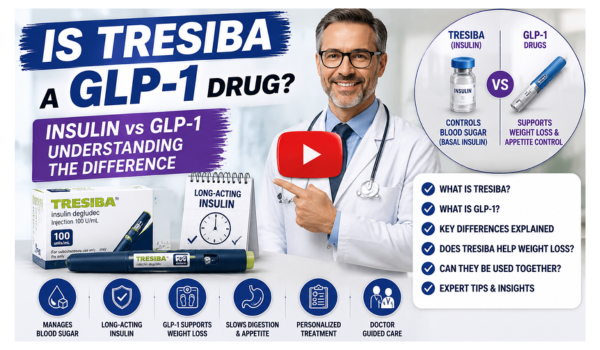

In modern diabetes care, many treatment options are available, each acting through a distinct biological pathway.
Because of this, confusion often arises when people try to compare medications that seem similar on the surface.
One of the most frequently searched questions today is whether Tresiba is a GLP-1 drug, especially since GLP-1 medications like semaglutide and tirzepatide have become widely known for both blood sugar control and weight loss support.
However, despite both being injectable diabetes treatments, they are not in the same drug category.
Tresiba is a long-acting basal insulin that directly replaces insulin in the body, while GLP-1 drugs work through gut hormone signaling that influences appetite, digestion speed, and insulin response.
This means they are not variations of the same treatment but completely different therapeutic approaches.
In this guide, we will break down everything in detail using explanations, comparisons, tables, and bullet points so you can clearly understand the difference.
What is Tresiba?
Tresiba is a long-acting basal insulin used in the management of both type 1 and type 2 diabetes. Its active ingredient, insulin degludec, is specifically designed to provide highly stable, long-lasting insulin coverage for more than 24 hours, sometimes extending up to 42 hours.
What makes Tresiba clinically important is its flat, steady release profile, meaning it does not produce pronounced peaks or sudden drops in insulin levels.
Instead, it forms a slow-release depot under the skin, allowing small and consistent amounts of insulin to enter the bloodstream over time. This helps maintain stable fasting glucose levels and reduces variability in daily blood sugar patterns.
Key characteristics of Tresiba:
- Long-acting basal insulin (insulin degludec)
- Works up to 42 hours
- Once-daily injection
- Provides background glucose control
- Used in type 1 and type 2 diabetes
What Tresiba actually does in simple terms:
- Replaces missing insulin in the body
- Helps glucose enter cells for energy
- Reduces liver glucose production
- Maintains stable blood sugar levels
What is GLP-1?
GLP-1 (Glucagon-Like Peptide-1) is a natural hormone released in the gut after eating food. Its job is not to replace insulin but to regulate how the body responds to food intake.
It helps control appetite, slows digestion, and improves insulin release only when needed. Because of these effects, GLP-1 has become a major target for modern diabetes and weight management medications.
GLP-1 medications mimic this natural hormone, producing stronger, longer-lasting effects than the body produces.
This leads to reduced hunger, improved satiety, and better blood sugar control after meals.
GLP-1 works through:
- Brain appetite regulation centers
- Digestive system slowing
- Pancreatic insulin response
- Blood sugar stabilization pathways
Common GLP-1 medications include:
- Ozempic
- Wegovy
- Mounjaro
- Zepbound
Is Tresiba a GLP-1 Drug?
The clear and medically accurate answer is NO — Tresiba is NOT a GLP-1 drug.
This is because both belong to completely different biological systems. Tresiba is part of insulin therapy, while GLP-1 medications are part of incretin hormone therapy.
Simple breakdown:
- Tresiba = replaces insulin directly
- GLP-1 drugs = enhance hormone signaling and appetite control
Why they are NOT the same:
- Different drug classes
- Different targets in the body
- Different mechanisms of action
- Different effects on weight and appetite
Even though both are used in diabetes care, they do not belong to the same category.
How Tresiba Works in the Body?
Tresiba works by forming a slow-release insulin depot under the skin after injection. From this depot, insulin is continuously released into the bloodstream in very small and stable amounts.
This allows the body to maintain consistent insulin levels without sudden peaks.
Once active in the bloodstream, insulin binds to cell-surface receptors and helps move glucose from the blood into cells, where it is used for energy.
At the same time, it reduces glucose production in the liver, helping prevent high fasting blood sugar levels.
Step-by-step mechanism:
- Injected under the skin
- Forms a long-acting insulin reservoir
- Gradual insulin release over 24–42 hours
- Glucose uptake into cells increases
- Liver glucose production decreases
Result:
- Stable fasting glucose
- Reduced blood sugar fluctuations
- Long-lasting baseline control
Role of Tresiba in Long-Term Blood Sugar Control
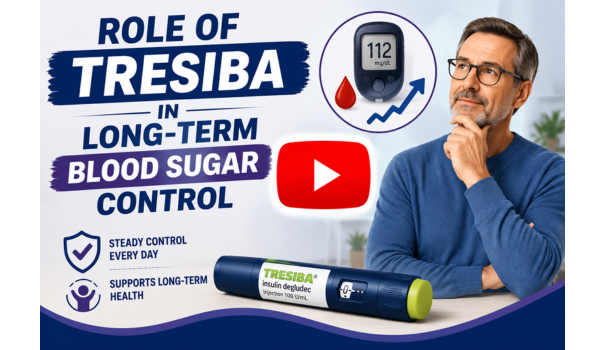
Tresiba plays an important role in long-term diabetes management by providing steady, continuous background insulin support that helps maintain stable blood sugar levels throughout the day and night.
Its main function is to control fasting and between-meal glucose levels by releasing insulin slowly and consistently over a long period of time, usually up to 24–42 hours.
Because of this stable action, it helps reduce sudden spikes and drops in blood sugar, making overall glucose control more predictable and easier to manage over time.
Key points:
- Maintains consistent baseline insulin levels
- Controls fasting and between-meal blood sugar
- Provides slow and steady release for 24–42 hours
- Reduces blood sugar fluctuations and instability
- Supports long-term diabetes management and stability
In simple terms, Tresiba acts as a stable background insulin foundation in the body, helping keep glucose levels balanced even when you are not eating, which is essential for long-term blood sugar control.
How does GLP-1 work?
GLP-1 medications work through a completely different system — the gut-brain metabolic pathway. Instead of replacing insulin, they enhance the body’s natural response to food intake.
When GLP-1 drugs are active, they slow stomach emptying, so food stays in the stomach longer, increasing fullness. They also send signals to the brain that reduce hunger and help naturally control food intake.
Main GLP-1 effects:
- Slows the digestion process
- Reduces appetite signals in the brain
- Increases insulin release only when needed
- Lowers glucagon (sugar production hormone)
Outcome:
- Reduced food intake
- Better post-meal sugar control
- Weight loss support in many patients
Tresiba vs GLP-1 – Full Comparison Table
| Feature | Tresiba | GLP-1 |
|---|---|---|
| Drug Class | Basal insulin | Hormone-based therapy |
| Main Function | Replaces insulin | Regulates appetite & insulin response |
| Target System | Blood glucose system | Gut-brain axis |
| Appetite Control | No effect | Strong appetite suppression |
| Weight Impact | Neutral or gain | Often weight loss |
| Usage | Type 1 & 2 diabetes | Type 2 diabetes & obesity |
Why do people confuse them?
There is a lot of confusion between these two medications because they are both injectable treatments and both are commonly used in diabetes management.
Additionally, both help lower blood sugar levels, which makes them seem similar at first glance.
However, the similarity ends there. Once you understand that Tresiba replaces insulin while GLP-1 drugs regulate hormone signaling and appetite, the difference becomes very clear.
Main reasons for confusion:
- Both are injections
- Both treat diabetes
- Both reduce blood sugar
- Both used in type 2 diabetes
Does Tresiba Help With Weight Loss?
Tresiba is not designed for weight loss and does not directly affect appetite or calorie intake. Its main purpose is glucose control.
However, insulin therapy can sometimes influence weight because the body becomes more efficient at storing glucose once insulin levels are stabilized.
Possible weight outcomes:
- Stable weight (most common)
- Slight weight gain (in some cases)
- Rare neutral/no change
Why weight gain may happen:
- Better glucose absorption
- Reduced glucose loss through urine
- Increased energy storage efficiency
Can Tresiba and GLP-1 Be Used Together?
Yes, in some clinical cases, doctors prescribe both together for type 2 diabetes management. This combination can help improve blood sugar control while also supporting appetite regulation and reducing insulin requirements.
Benefits of combination therapy:
- Better glucose stability
- Lower insulin dosage needs
- Improved appetite control
- Enhanced metabolic balance
However, this must always be medically supervised to avoid hypoglycemia and ensure proper dosage balance.
Who Uses Tresiba vs GLP-1 Drugs?
Tresiba is typically used for:
- Type 1 diabetes patients
- Type 2 diabetes requiring basal insulin
- Patients with fasting glucose issues
GLP-1 drugs are typically used for:
- Type 2 diabetes patients
- Individuals needing weight loss support
- Patients with appetite control issues
Conclusion
So, is Tresiba a GLP-1 drug?
The answer is clearly no. Tresiba is a long-acting basal insulin that directly replaces insulin in the body and provides continuous background glucose control, whereas GLP-1 medications act through gut hormone pathways to regulate appetite, digestion, and insulin response.
Although both are widely used in diabetes treatment and may sometimes be prescribed together, they belong to completely different drug classes with different mechanisms, targets, and effects.
GLP-1 drugs like Ozempic and Wegovy primarily target appetite and metabolic signaling, while Tresiba focuses solely on insulin replacement and long-term glucose stability.
Understanding this difference is essential for anyone researching diabetes treatments or comparing modern metabolic therapies.
.
.
